
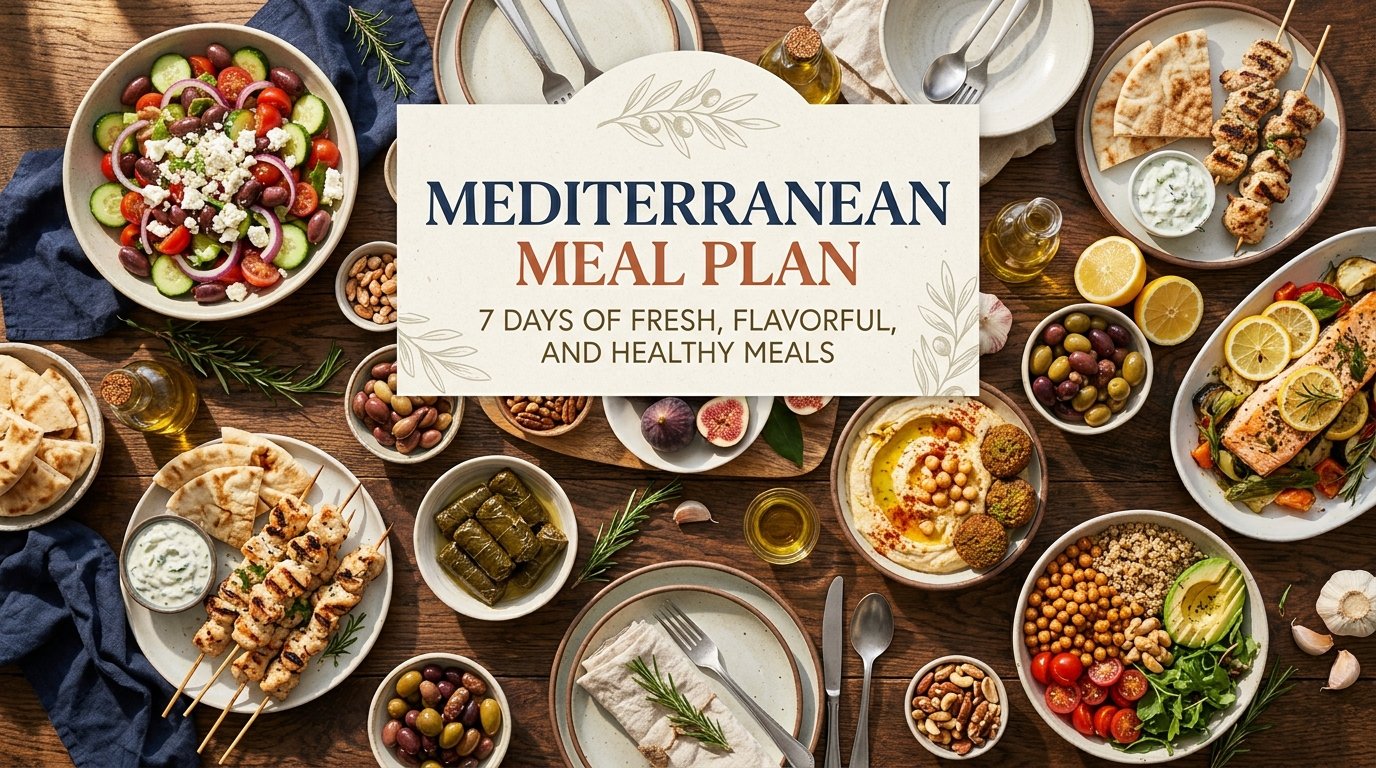
Mediterranean Meal Plan: 7 Days of Fresh, Flavorful, and Healthy Meals
There is something special about sitting down to a table filled with colorful vegetables, warm homemade food, fresh herbs, and the smell of garlic and lemon drifting through the kitchen. For me, that is what Mediterranean cooking is all about. The food feels comforting and satisfying without needing complicated recipes or fancy ingredients.
I love the idea of a Mediterranean meal plan because it makes everyday cooking feel less stressful. Instead of standing in front of the refrigerator wondering what to make for dinner, I can plan a few delicious meals ahead of time and enjoy the process of cooking.
Imagine starting your morning with creamy Greek yogurt and fresh berries, enjoying a crisp chickpea salad for lunch, and finishing the day with lemon-herb chicken and roasted vegetables. These are simple meals that can bring a little sunshine to an ordinary weekday.
If you have ever wanted to eat more vegetables, enjoy healthy fats, or add variety to your family meals, this 7-day Mediterranean meal plan is a lovely place to start.
What Is a Mediterranean Meal Plan?
A Mediterranean meal plan is inspired by traditional eating patterns in countries bordering the Mediterranean Sea, including Greece, Italy, and parts of Spain. It emphasizes vegetables, fruits, beans, lentils, whole grains, nuts, seeds, olive oil, and herbs.
Fish and seafood are included regularly, while poultry, eggs, yogurt, and cheese can be enjoyed in moderate amounts. Red meat and heavily processed foods are generally eaten less often.
One of the things I appreciate most about this style of eating is that it focuses on adding nourishing foods rather than making every meal feel restrictive. You can still enjoy pasta, bread, potatoes, and your favorite family recipes while balancing your plate with vegetables, protein, and healthy fats.
Why I Love Planning Mediterranean Meals
When life gets busy, even deciding what to cook can feel exhausting. Having a weekly menu makes a difference because I can shop with a plan, prepare a few ingredients ahead of time, and spend less time worrying about dinner.
Mediterranean recipes are especially helpful because many ingredients work in several different meals. A batch of cooked chickpeas can become a lunch salad one day and a hearty soup another day. Roasted vegetables can accompany chicken, fish, or whole grains.
I also love how much flavor comes from simple ingredients. Fresh lemon juice, garlic, oregano, parsley, and extra-virgin olive oil can turn an ordinary meal into something memorable.
The best part is that you do not have to cook elaborate dishes every evening. Sometimes a bowl of lentil soup and a slice of whole-grain bread is exactly what you need.
7-Day Mediterranean Meal Plan
This menu is designed as a flexible starting point for one adult. Adjust portions to your appetite, activity level, and nutritional needs. Snacks are optional.
Day 1: Fresh and Colorful
Breakfast: Greek yogurt bowl with 170 g plain Greek yogurt, ½ cup fresh berries, and 1 tablespoon chopped walnuts.
Lunch: Mediterranean chickpea salad with ¾ cup cooked chickpeas, 1 cup chopped cucumber and tomatoes, 30 g feta cheese, parsley, lemon juice, and 1 teaspoon olive oil.
Dinner: Lemon-herb chicken with 150 g raw boneless chicken breast, 1 cup roasted broccoli, and ½ cup cooked quinoa.
Optional snack: One small apple.
Day 2: Simple Mediterranean Comfort Food
Breakfast: Two eggs with one slice of whole-grain toast and sliced tomatoes.
Lunch: Lentil soup made with 1 cup cooked lentils, tomatoes, carrots, onion, garlic, and vegetable broth.
Dinner: Baked salmon using a 150 g raw fillet, served with 1 cup steamed green beans and ½ cup cooked brown rice.
Optional snack: 20 g almonds.
Day 3: A Taste of Greece
Breakfast: Overnight oats made with ½ cup rolled oats, ½ cup milk, 1 tablespoon chia seeds, and cinnamon.
Lunch: Greek-style chicken salad with 120 g cooked chicken, leafy greens, cucumber, tomatoes, 30 g feta, olives, and lemon-olive oil dressing.
Dinner: Turkey meatballs made with 150 g lean ground turkey, garlic, oregano, and egg, served with ¾ cup cooked whole-wheat pasta and homemade tomato sauce.
Optional snack: 150 g plain yogurt.
Day 4: Easy Plant-Based Favorites
Breakfast: Whole-grain toast with ¼ mashed avocado and one boiled egg.
Lunch: Hummus and vegetable wrap with one whole-wheat tortilla, ¼ cup hummus, cucumber, tomatoes, and leafy greens.
Dinner: Chickpea and vegetable stew with 1 cup cooked chickpeas, zucchini, tomatoes, onion, garlic, and spices, served with ½ cup cooked brown rice.
Optional snack: One orange.
Day 5: Lemon, Herbs, and Seafood
Breakfast: 170 g plain Greek yogurt with ½ cup berries and 1 tablespoon pumpkin seeds.
Lunch: Tuna and white bean salad with 100 g drained tuna, ½ cup cooked white beans, tomatoes, cucumber, parsley, and lemon dressing.
Dinner: Baked cod using a 150 g raw fillet, served with 1 cup roasted zucchini and peppers and ¾ cup cooked quinoa.
Optional snack: One pear.
Day 6: A Relaxed Weekend Menu
Breakfast: Two scrambled eggs with spinach and one slice of whole-grain toast.
Lunch: Mediterranean lentil salad with ¾ cup cooked lentils, cucumber, tomatoes, parsley, lemon juice, and 1 teaspoon olive oil.
Dinner: Roasted chicken using 150 g raw boneless chicken, served with 150 g roasted potatoes and 1 cup green beans.
Optional snack: A small handful of walnuts.
Day 7: A Cozy Sunday Dinner
Breakfast: Oatmeal made with ½ cup rolled oats, milk or water, cinnamon, and ½ sliced banana.
Lunch: Leftover roasted chicken served over leafy greens with tomatoes, cucumber, and olive oil-lemon dressing.
Dinner: Mediterranean baked fish using a 150 g raw fillet, served with roasted vegetables and ½ cup cooked brown rice.
Optional snack: Plain Greek yogurt with a few berries.
My Favorite Mediterranean Recipe: Lemon-Herb Chicken
If there is one recipe that captures the fresh, comforting spirit of Mediterranean cooking, it is lemon-herb chicken. The ingredients are simple, the preparation is easy, and the flavor works beautifully with salads, roasted vegetables, quinoa, or brown rice.
Ingredients
150 g boneless, skinless chicken breast
1 tablespoon extra-virgin olive oil
1 tablespoon fresh lemon juice
1 garlic clove, minced
½ teaspoon dried oregano
¼ teaspoon paprika
Black pepper, to taste
Salt, to taste, if appropriate for your diet
1 tablespoon chopped fresh parsley
Instructions
Step 1: Prepare the marinade. In a small bowl, combine olive oil, lemon juice, garlic, oregano, paprika, black pepper, and salt.
Step 2: Coat the chicken. Add the chicken and turn it until coated. Let it marinate in the refrigerator for 15–30 minutes.
Step 3: Cook the chicken. Heat a skillet over medium heat. Cook the chicken, turning as needed, until the thickest part reaches 74°C (165°F). Cooking time will depend on thickness.
Step 4: Let it rest. Allow the chicken to rest for a few minutes before slicing.
Step 5: Finish and serve. Sprinkle with fresh parsley and an extra squeeze of lemon if desired. Serve with roasted vegetables and quinoa.
Why This Recipe Is Worth Keeping
The lemon adds brightness, the garlic gives the chicken a wonderful aroma, and the oregano brings that familiar Mediterranean flavor. It is easy enough for a weeknight but also makes a lovely meal when you have family or friends around the table.
I especially like recipes like this because the leftovers can be used in wraps, salads, or grain bowls the next day.
Mediterranean Grocery Shopping List
Planning the shopping list before heading to the store makes the whole week easier. The quantities below are approximate for one adult following the seven-day menu, with some flexibility for leftovers and ingredient substitutions.
Fresh Produce
- Tomatoes: 8–10 medium
- Cucumbers: 3 medium
- Broccoli: 1 large head
- Green beans: approximately 400 g
- Zucchini: 3 medium
- Bell peppers: 3
- Carrots: 3
- Yellow onions: 3
- Garlic: 1 bulb
- Baby spinach: 1 bag
- Mixed leafy greens: 1 large bag
- Fresh parsley: 1 bunch
- Lemons: 5–6
- Avocado: 1
- Potatoes: approximately 300 g
- Bananas: 2
- Apples: 2
- Oranges: 1–2
- Pears: 1–2
- Fresh berries: approximately 300 g
Protein Foods
- Boneless, skinless chicken breast or thighs: approximately 600 g
- Salmon fillet: 150 g
- Cod or another suitable white fish: 300 g
- Lean ground turkey: 150–200 g
- Canned tuna: 1 small can
- Eggs: 6
- Cooked or canned chickpeas: approximately 3 cups
- Cooked lentils: approximately 2½ cups
- Cooked white beans: ½ cup
- Plain Greek yogurt: approximately 700 g
- Feta cheese: 100 g
- Hummus: 1 small container
Whole Grains and Pantry Staples
- Rolled oats: 1 small package
- Quinoa: approximately 1 cup dry
- Brown rice: approximately 1 cup dry
- Whole-wheat pasta: 1 small package
- Whole-grain bread: 1 loaf
- Whole-wheat tortillas: 1 small package
- Low-sodium vegetable broth: 1 carton
- Canned chopped tomatoes: 2 cans
- Extra-virgin olive oil
- Chia seeds
- Walnuts
- Almonds
- Pumpkin seeds
- Olives
- Peanut butter, optional
Herbs and Seasonings
- Dried oregano
- Paprika
- Ground cinnamon
- Black pepper
- Cumin
- Salt, as appropriate for your needs
Shopping tip: Frozen fish, frozen berries, canned beans, and frozen vegetables can be useful budget-friendly alternatives. Choose canned beans with no added salt when available, or rinse them before use.
How to Meal Prep for the Week
You do not have to spend your entire Sunday cooking. A little preparation is enough to make weekday meals easier.
1. Prepare your grains. Cook a batch of brown rice and quinoa, then divide them into meal-sized portions.
2. Wash and chop vegetables. Prepare cucumbers, peppers, carrots, and leafy greens. Keep salad ingredients dry and store them in airtight containers.
3. Make a simple dressing. Combine olive oil, lemon juice, black pepper, and dried oregano in a small jar. Refrigerate and shake before using.
4. Prepare proteins safely. Cook chicken or turkey for the next few days, or freeze later-week portions raw. Refrigerate cooked leftovers promptly and use them within three to four days.
5. Keep quick meals available. Canned chickpeas, tuna, frozen vegetables, eggs, and plain yogurt make it easier to prepare a meal when time is short.
Tips for Making Mediterranean Meals Delicious
Use lemon juice and fresh herbs to brighten the flavor of chicken, fish, and vegetables.
Choose extra-virgin olive oil as your main cooking fat, using portions that suit your energy needs.
Add beans and lentils to soups and salads for fiber and plant-based protein.
Choose whole grains more often than refined grains.
Enjoy fruit as a snack or part of breakfast instead of relying on sugary drinks.
Keep your meals flexible. If you do not enjoy cod, use another fish; if quinoa is expensive, brown rice or another whole grain works well.
Frequently Asked Questions
Is a Mediterranean meal plan healthy?
A Mediterranean-style eating pattern is widely recognized as a health-supportive approach, emphasizing vegetables, fruits, legumes, whole grains, nuts, olive oil, and fish. Individual needs vary, but this pattern can be adapted for different preferences and budgets.
Can I follow this meal plan for weight loss?
You may adapt it to support weight management by adjusting portions to your energy needs. Weight loss depends on overall calorie intake, activity, sleep, and other factors. The menu itself does not guarantee a particular result.
Can I eat pasta and bread on a Mediterranean diet?
Yes. Whole-wheat pasta and whole-grain bread can fit comfortably into this eating pattern. Pair them with vegetables, beans, fish, chicken, or other protein sources for balanced meals.
Is this meal plan suitable for people with diabetes?
Many of the meals can be adapted for people with diabetes, but carbohydrate portions and individual glucose responses matter. Choose appropriate servings of grains, beans, fruit, and dairy, and work with a healthcare professional to personalize the plan.
Can I make these meals on a budget?
Absolutely. Use seasonal produce, canned beans, lentils, eggs, frozen vegetables, and affordable fish or chicken cuts. You can also substitute locally available whole grains and vegetables without losing the overall Mediterranean style.
Final Thoughts
For me, the best part of a Mediterranean meal plan is the feeling that eating well does not have to be complicated. A bowl of lentil soup, a fresh salad with lemon dressing, or a plate of herb-roasted chicken can turn an ordinary meal into something worth looking forward to.
Start with a few recipes you enjoy, prepare some ingredients ahead of time, and make changes that fit your household and budget. There is no need to follow every meal perfectly.
The goal is to create a routine that brings more fresh food, more variety, and more enjoyment to your table—one delicious meal at a time.