
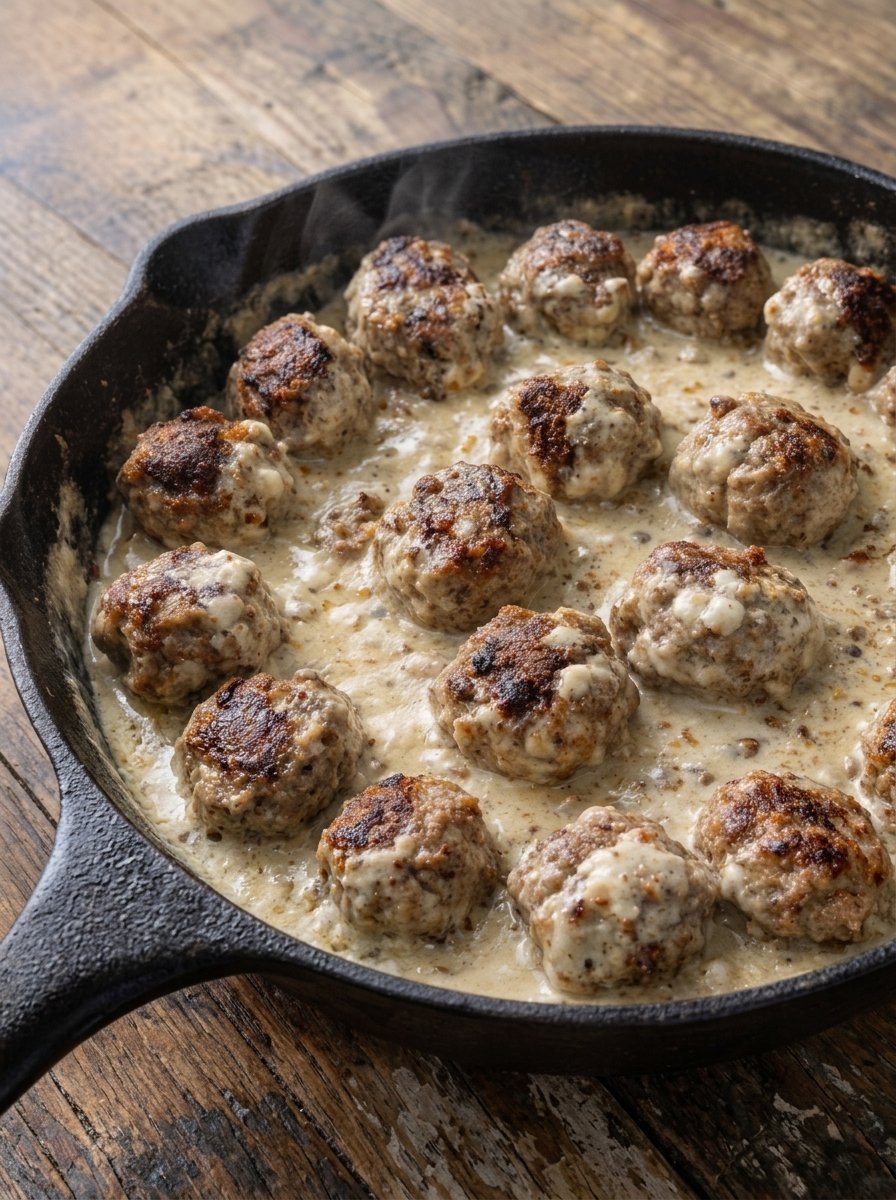
Low Carb Carnivore Lamb Meatballs in Creamy Goat Cheese Sauce
If you love rich, savory meals with tender meatballs and a velvety cheese sauce, these Low Carb Carnivore Lamb Meatballs in Goat Cheese Sauce are a must-try! Juicy lamb meatballs are seasoned simply, browned until beautifully golden, and simmered in a creamy goat cheese sauce that coats every bite with tangy, buttery richness.
Lamb has a naturally deep, savory flavor that pairs wonderfully with the distinctive creaminess of goat cheese. A little butter, heavy cream, and broth bring everything together into a luxurious sauce without the need for flour, breadcrumbs, or other carb-heavy ingredients.
This recipe is ideal for a cozy dinner, a satisfying low-carb lunch, or a special meal when you want something comforting yet a little different from your usual beef recipes. With simple animal-based ingredients and an easy stovetop method, these meatballs deliver plenty of flavor without complicated preparation.
❤️ Why You’ll Love This Recipe
Low carb and carnivore-inspired: Made primarily with lamb, eggs, goat cheese, butter, and cream.
Tender and juicy: Ground lamb creates flavorful meatballs with a naturally rich texture.
Creamy goat cheese sauce: Tangy goat cheese melts into a silky, savory coating.
No breadcrumbs required: Eggs help bind the meatballs without traditional fillers.
Naturally gluten-free when ingredients are verified: No flour or bread crumbs are needed.
Protein-rich: Lamb and dairy provide a satisfying combination of protein and fat.
One-pan convenience: Brown the meatballs and prepare the sauce in the same skillet.
Easy to customize: Adjust the richness and tanginess to suit your preferences.
📋 Recipe Information
Prep Time: 15 minutes
Cook Time: 25–30 minutes
Total Time: Approximately 40–45 minutes
Servings: 4
Course: Main Dish, Dinner
Cuisine: Carnivore-Inspired, Mediterranean-Inspired
Difficulty: Easy
Diet: Low Carb, Keto-Friendly, Carnivore-Inspired
🛒 Ingredients
For the Lamb Meatballs
1 pound ground lamb
1 large egg
2 tablespoons finely grated Parmesan cheese, optional
1 tablespoon melted butter, cooled slightly
½ teaspoon salt, or to taste
¼ teaspoon black pepper, optional
¼ teaspoon garlic powder, optional
For the Creamy Goat Cheese Sauce
4 ounces soft goat cheese
¾ cup heavy cream
½ cup beef broth or lamb broth
2 tablespoons butter
¼ teaspoon salt, or to taste
¼ teaspoon black pepper, optional
Optional Finishing Touches
An extra ounce of crumbled goat cheese
A small pat of butter
A sprinkle of Parmesan cheese
Ingredient notes:
Ground lamb: Choose lamb with a moderate fat content for juicy, flavorful meatballs. If the mixture feels excessively greasy after browning, carefully spoon off some of the excess fat before making the sauce.
Goat cheese: Soft, fresh goat cheese is easiest to blend into the sauce. Its tangy flavor balances the richness of the lamb.
Heavy cream: This creates the creamy foundation of the sauce. Avoid boiling it vigorously, as gentle heat helps maintain a smooth texture.
Broth: Beef or lamb broth adds savory depth. For a stricter carnivore approach, choose broth made from animal ingredients without vegetable additives.
Parmesan: This is optional. It adds savory flavor and helps firm the meatballs, but you can omit it if you prefer a simpler ingredient list.
Seasonings: Salt is the simplest seasoning for a carnivore-inspired version. Garlic powder and black pepper are optional and may not fit every strict carnivore approach.
🍳 Equipment Needed
Large skillet with a lid
Large mixing bowl
Measuring cups and spoons
Whisk or wooden spoon
Spatula or tongs
Instant-read meat thermometer
👩🍳 How to Make Low Carb Carnivore Lamb Meatballs in Goat Cheese Sauce
Step 1: Prepare the Meatball Mixture
Place the ground lamb in a large mixing bowl.
Add the egg, optional Parmesan, cooled melted butter, salt, and any optional seasonings.
Mix gently with clean hands or a fork until the ingredients are evenly combined.
Avoid overmixing, which can make the meatballs dense.
Step 2: Shape the Meatballs
Roll the mixture into approximately 16 small meatballs, each about 1–1½ inches wide.
Try to make them similar in size so they cook evenly.
Place them on a clean plate while you heat the skillet.
Step 3: Brown the Meatballs
Heat a large skillet over medium heat.
Add a small amount of butter if the pan needs it, then arrange the meatballs in a single layer.
Cook for approximately 6–8 minutes, turning occasionally until they develop a golden-brown crust on several sides.
They don’t need to be fully cooked through at this stage because they’ll finish cooking in the sauce.
If your skillet is small, brown the meatballs in batches rather than overcrowding the pan.
Step 4: Prepare the Goat Cheese Sauce
Transfer the browned meatballs temporarily to a clean plate.
Reduce the heat to low or medium-low. If there is excessive rendered fat, carefully remove some, leaving a small amount for flavor.
Add the beef or lamb broth and gently scrape up the browned bits from the bottom of the skillet.
Stir in the heavy cream and butter.
Crumble the goat cheese into the pan a little at a time, whisking gently until it begins to melt into the cream.
Continue stirring until the sauce is mostly smooth.
If the sauce seems too thick, add a small splash of broth. If it is too thin, allow it to simmer gently for a few minutes.
Step 5: Return the Meatballs to the Sauce
Place the browned meatballs back into the skillet.
Turn them gently so they’re coated in the creamy goat cheese sauce.
Cover the skillet and simmer over low heat for approximately 8–12 minutes, or until the meatballs are fully cooked.
Avoid a rapid boil, which can cause the cream sauce to separate.
Step 6: Check for Doneness
Check the center of a meatball with an instant-read thermometer. Ground lamb should reach an internal temperature of 160°F (71°C) for food safety.
If the meatballs haven’t reached that temperature, continue cooking gently and check again.
Step 7: Finish the Sauce
Once the meatballs are cooked, uncover the skillet and stir the sauce gently.
Taste and adjust the salt if needed.
For an extra-rich finish, stir in a small pat of butter or sprinkle a little additional goat cheese over the top.
Let the dish rest for 2–3 minutes before serving so the sauce can settle and cling to the meatballs.
Step 8: Serve and Enjoy
Spoon the lamb meatballs into bowls and pour the creamy goat cheese sauce generously over them.
Serve immediately while the sauce is warm and silky.
For an animal-based meal, enjoy them on their own or with another animal-based food that fits your preferred version of carnivore eating.
💡 Tips for Perfect Lamb Meatballs
Don’t Overwork the Meat
Mix the ingredients just until combined. Gentle handling helps keep the meatballs tender.
Brown for Extra Flavor
The browned surface adds savory depth to the sauce. Take your time with this step, but avoid burning the butter or the meat.
Let the Goat Cheese Soften
Allow the goat cheese to sit at room temperature briefly before cooking. It will blend more easily into the warm cream.
Keep the Sauce at a Gentle Simmer
High heat can cause dairy-based sauces to become grainy or separate. Low, steady heat gives the goat cheese time to melt smoothly.
Adjust the Thickness Gradually
Add broth a tablespoon at a time if the sauce is too thick. If it’s too thin, simmer it gently without the lid for a few minutes.
Taste Before Adding More Salt
Goat cheese, Parmesan, and broth may already contribute saltiness. Taste the finished sauce before seasoning further.
🌟 Delicious Variations
1. Extra-Creamy Goat Cheese Meatballs
Add another 1–2 ounces of goat cheese for a thicker, tangier sauce. If needed, loosen it with a little extra cream or broth.
2. Lamb and Parmesan Meatballs
Increase the Parmesan slightly and omit the optional garlic and pepper for a simple, savory flavor profile.
3. Garlic Butter Goat Cheese Sauce
Stir a little garlic powder into the warm butter before adding the broth and cream. This creates a more pronounced savory flavor, though it is less suitable for strict carnivore eating.
4. Rich Lamb Fat Sauce
For a more animal-based version, replace some of the butter with rendered lamb fat. The flavor will be richer and more intensely lamb-forward.
5. Beef and Lamb Meatballs
Replace half the ground lamb with ground beef for a milder flavor and a different texture.
6. Oven-Baked Lamb Meatballs
Arrange the meatballs on a lined baking tray and bake at 400°F (200°C) until browned and cooked through, checking that the centers reach 160°F (71°C). Prepare the goat cheese sauce separately on the stovetop, then combine them before serving.
7. Strict Carnivore-Inspired Version
Use ground lamb, egg, salt, goat cheese, heavy cream, and butter. Omit the optional Parmesan, garlic powder, black pepper, and any broth that contains plant-derived ingredients.
Ingredient tolerance and personal carnivore rules vary, so check labels and choose products that fit your approach.
🍽️ What to Serve With Lamb Meatballs in Goat Cheese Sauce
These meatballs are rich and satisfying, so simple sides work particularly well.
For a carnivore-inspired meal:
Crispy bacon
Butter-fried eggs
Grilled lamb chops
Plain cooked beef
Extra goat cheese on the side
For a low-carb meal:
Cauliflower mash
Sautéed zucchini
Roasted broccoli
Buttered cabbage
Garlic mushrooms
Steamed asparagus
For a Mediterranean-inspired dinner:
Roasted eggplant
Fresh cucumber salad
Grilled zucchini
A small serving of roasted vegetables
Serving suggestion: Spoon the meatballs over cauliflower mash and drizzle extra goat cheese sauce over the top for a creamy, comforting low-carb dinner.
🥡 Storage and Reheating
Refrigerator
Allow the meatballs to cool slightly, then transfer them and the sauce to an airtight container within 2 hours.
Refrigerate for 3–4 days.
Freezer
Freeze the cooked meatballs with the sauce in a freezer-safe container for up to 2 months for best quality.
Cream-based sauces may separate slightly after thawing, but gentle reheating and stirring can help bring the sauce back together.
Reheating on the Stove
Place the meatballs and sauce in a skillet over low heat.
Add a splash of cream or broth if needed, cover, and warm gently until heated through. Reheated leftovers should reach 165°F (74°C).
Reheating in the Microwave
Place a serving in a microwave-safe dish and cover loosely.
Heat in short intervals, stirring the sauce gently between intervals, until the meatballs are hot throughout.
Meal Prep Tip
Divide the meatballs and sauce into individual portions before refrigerating. Keeping the meatballs coated in sauce helps them stay moist during reheating.
📊 Approximate Nutrition Information
Estimated per serving, assuming four servings and including the meatballs and sauce, with the optional Parmesan omitted:
Calories: 550–700
Protein: 25–32 g
Fat: 45–58 g
Total Carbohydrates: Approximately 3–6 g
Fiber: 0 g
Net Carbohydrates: Approximately 3–6 g
Nutrition values are estimates and vary depending on the fat content of the lamb, the goat cheese brand, and the amount of sauce consumed. Check the labels on broth and dairy products for added ingredients, and calculate the recipe using your actual ingredients if you need precise tracking.
This recipe is naturally low in carbohydrates compared with breadcrumb-based meatballs served with flour-thickened sauce. However, goat cheese, cream, and other dairy products can contain small amounts of carbohydrates, so the dish should not be considered guaranteed zero-carb.
❓ Frequently Asked Questions
Can I make these lamb meatballs without breadcrumbs?
Yes. The egg helps bind the meat mixture, while the optional Parmesan contributes structure. The meatballs may be slightly more delicate than traditional breadcrumb-based versions, so handle them gently.
Does goat cheese melt smoothly into sauce?
Soft goat cheese usually blends well into warm cream, although its texture can remain slightly rustic. Crumbling it into the sauce gradually and keeping the heat low helps produce a smoother finish.
Can I substitute cream cheese for goat cheese?
Yes. Cream cheese creates a milder, thicker sauce with less tang. You may want to add a little extra broth or cream to achieve your preferred consistency.
Can I use frozen meatballs?
You can use frozen cooked lamb meatballs, but check their ingredients if you’re following a strict low-carb or carnivore plan. Heat them according to package instructions or until thoroughly hot, then prepare the sauce and combine them.
Can I prepare the meatballs ahead of time?
Yes. Shape the raw meatballs, cover them, and refrigerate for up to 24 hours before cooking. Keep them cold and cook them thoroughly before serving.
Why is my goat cheese sauce too thick?
Goat cheese can thicken the sauce as it cools. Whisk in a little warm broth or cream until it reaches the desired consistency.
Why did my sauce become grainy?
The sauce may have been heated too aggressively or the cheese may not have blended evenly. Reduce the heat, whisk gently, and add a small splash of cream to help smooth the texture.
Are these meatballs keto-friendly?
They can fit many ketogenic meal plans because they contain very few carbohydrate-rich ingredients. Check the goat cheese, broth, and any optional seasonings for their actual carbohydrate content.
Can I use ground beef instead of lamb?
Absolutely. Ground beef makes delicious meatballs with the same goat cheese sauce. The flavor will be milder, and the fat content will depend on the beef you choose.
💚 Final Thoughts
These Low Carb Carnivore Lamb Meatballs in Goat Cheese Sauce combine tender, savory lamb with a rich, tangy sauce for a comforting dinner that feels a little luxurious without requiring complicated ingredients.
Whether you serve them on their own, alongside cauliflower mash, or as part of a larger low-carb meal, they’re a wonderful way to enjoy the bold flavor of lamb with the creamy goodness of goat cheese.
With simple preparation, no breadcrumbs, and a sauce that comes together in one skillet, this recipe is perfect for anyone who loves rich, satisfying meals with minimal fuss.