
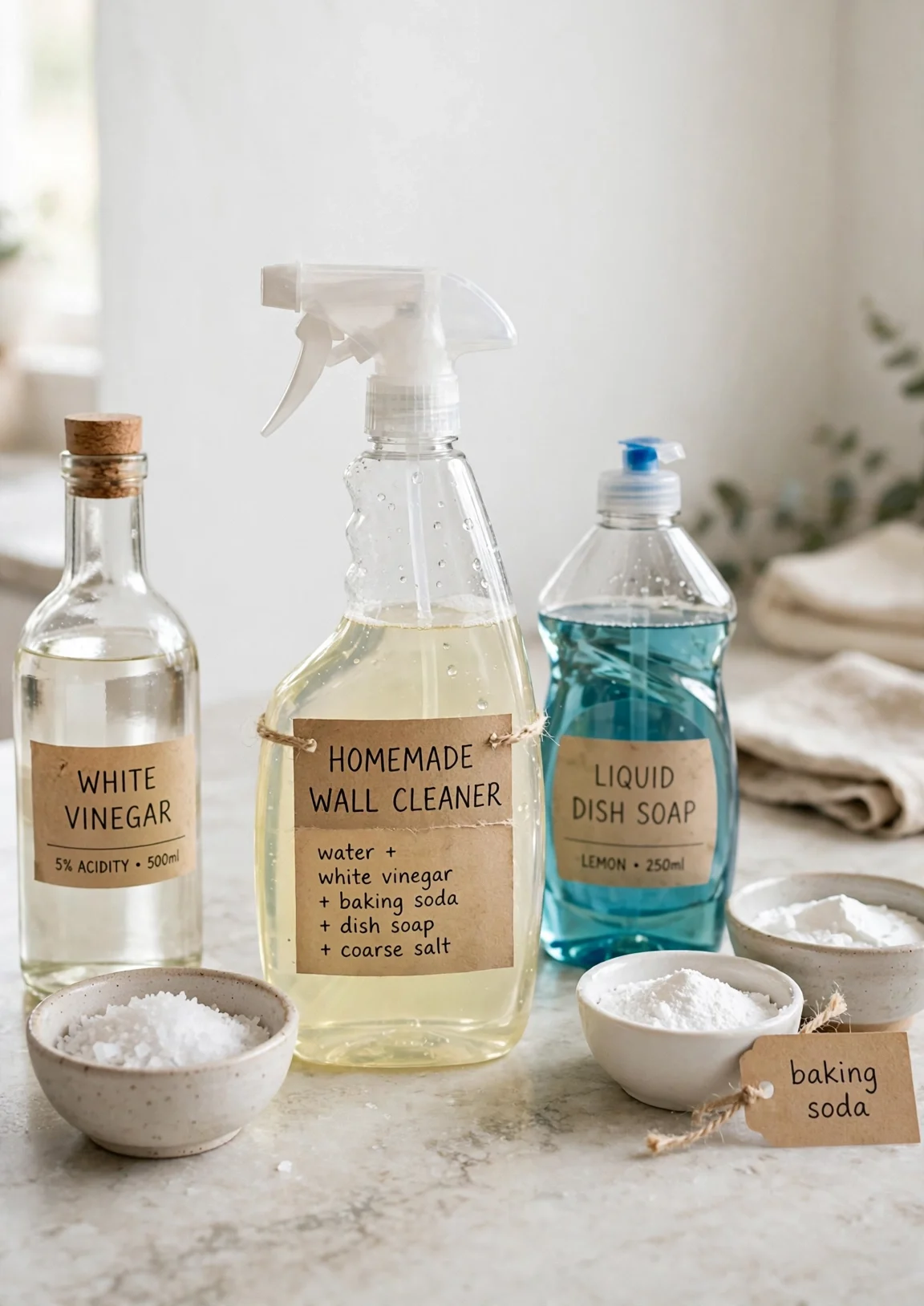
Homemade Wall & Floor Cleaner Spray
Want a simple way to freshen up scuffed walls and grimy floors? This easy homemade cleaner uses just water and liquid dish soap to loosen everyday dirt, fingerprints, and greasy marks. It’s inexpensive, quick to prepare, and handy for routine spot-cleaning around the house.
Unlike complicated cleaning mixtures, this gentle solution keeps the ingredient list short. You can mix a small batch whenever you need it and use it with a soft cloth or sponge.
Important: Always test a small, hidden area first. Different wall paints, floor finishes, and sealants react differently to cleaning products.
Why You’ll Love This Cleaner
Simple ingredients: Uses water and ordinary liquid dish soap.
Budget friendly: No specialty cleaning products required.
Quick to prepare: Mixes in just a few minutes.
Useful for spot-cleaning: Helps loosen everyday grime and light greasy marks.
Easy to customize: Make a small batch whenever needed.
Less complicated: No need to combine several household ingredients.
Ingredients
2 cups warm water
1 teaspoon mild liquid dish soap
Use a clear, clean spray bottle and a soft microfiber cloth.
How to Make Homemade Wall & Floor Cleaner Spray
Step 1: Prepare the Water
Pour 2 cups of warm water into a clean mixing jug. The water should be warm, not boiling.
Step 2: Add the Dish Soap
Add 1 teaspoon of mild liquid dish soap.
Step 3: Mix Gently
Stir slowly until the soap is distributed. Avoid shaking vigorously, as this can create too many suds.
Step 4: Fill the Spray Bottle
Using a small funnel, pour the mixture into a clean spray bottle.
Label the bottle with its ingredients and preparation date.
How to Use It
Test the cleaner on a small, inconspicuous area first.
Lightly spray the solution onto a microfiber cloth rather than soaking the surface.
Wipe away fingerprints, light scuffs, or everyday grime.
For stubborn marks, gently rub with a soft, non-scratch sponge.
Wipe again with a clean cloth dampened with plain water if soap residue remains.
Dry the surface with a clean towel.
For floors, apply the solution sparingly with a cloth or mop. Avoid leaving the floor wet, as it may become slippery.
Important Cleaning Tips
Check the Surface First
Painted walls can become shiny, discolored, or damaged if scrubbed too hard. Use a gentle touch and test first.
Use a Microfiber Cloth
Microfiber helps lift everyday dust and grime without the rough scrubbing that can damage finishes.
Don’t Overuse Soap
More dish soap does not necessarily mean better cleaning. Too much can leave a sticky film on walls and floors.
Keep Water to a Minimum
Avoid soaking laminate, hardwood, painted surfaces, or unsealed materials. Excess moisture can cause damage.
Don’t Use on Every Floor Type
Follow the flooring manufacturer’s cleaning recommendations. Avoid homemade vinegar cleaners on marble, limestone, travertine, and other natural stone surfaces.
⚠️ Safety Notes
Never mix household cleaners with bleach or ammonia.
Do not combine vinegar and baking soda in a closed spray bottle; the reaction releases carbon dioxide gas and can build pressure.
Keep cleaning solutions away from children and pets.
Do not spray near electrical outlets, appliances, or exposed wiring.
Do not use abrasive salt mixtures on delicate paint, polished surfaces, or sealed flooring unless the manufacturer confirms they are suitable.
Store the bottle clearly labeled and never reuse it for food or drinks.
🥡 Storage
For best results, make a small batch and use it promptly. Keep the bottle labeled and tightly closed, away from heat and direct sunlight. Discard the solution if it changes appearance or develops an unusual odor.
❓ Frequently Asked Questions
Can I use this cleaner on painted walls?
You can try it on washable, durable paint, but test a hidden spot first. Use very little solution on the cloth and avoid scrubbing flat or delicate paint.
Can I use it on tile floors?
It may be suitable for many glazed ceramic or porcelain tiles, but check the grout and manufacturer’s care instructions. Rinse away soap residue and dry the floor to prevent slipperiness.
Can I add white vinegar?
Vinegar is not suitable for every surface. Avoid it on marble, limestone, travertine, and other acid-sensitive natural stone. It can also affect some finishes.
Should I add baking soda?
It isn’t necessary for this spray. Baking soda and vinegar react with each other, reducing the cleaning benefits of each. Baking soda can also leave particles or clog a spray nozzle.
Why shouldn’t I add coarse salt?
Coarse salt can be abrasive and may scratch delicate finishes or leave residue. It is not needed for this gentle cleaning solution.
Can I use hot or boiling water?
Use warm water instead. Boiling water is unnecessary and creates a burn risk when preparing a spray cleaner.
💚 Final Thoughts
This Homemade Wall & Floor Cleaner Spray is a simple option for everyday spot-cleaning. With just warm water and a little mild dish soap, you can tackle light grime and fingerprints without making a complicated cleaning mixture.