
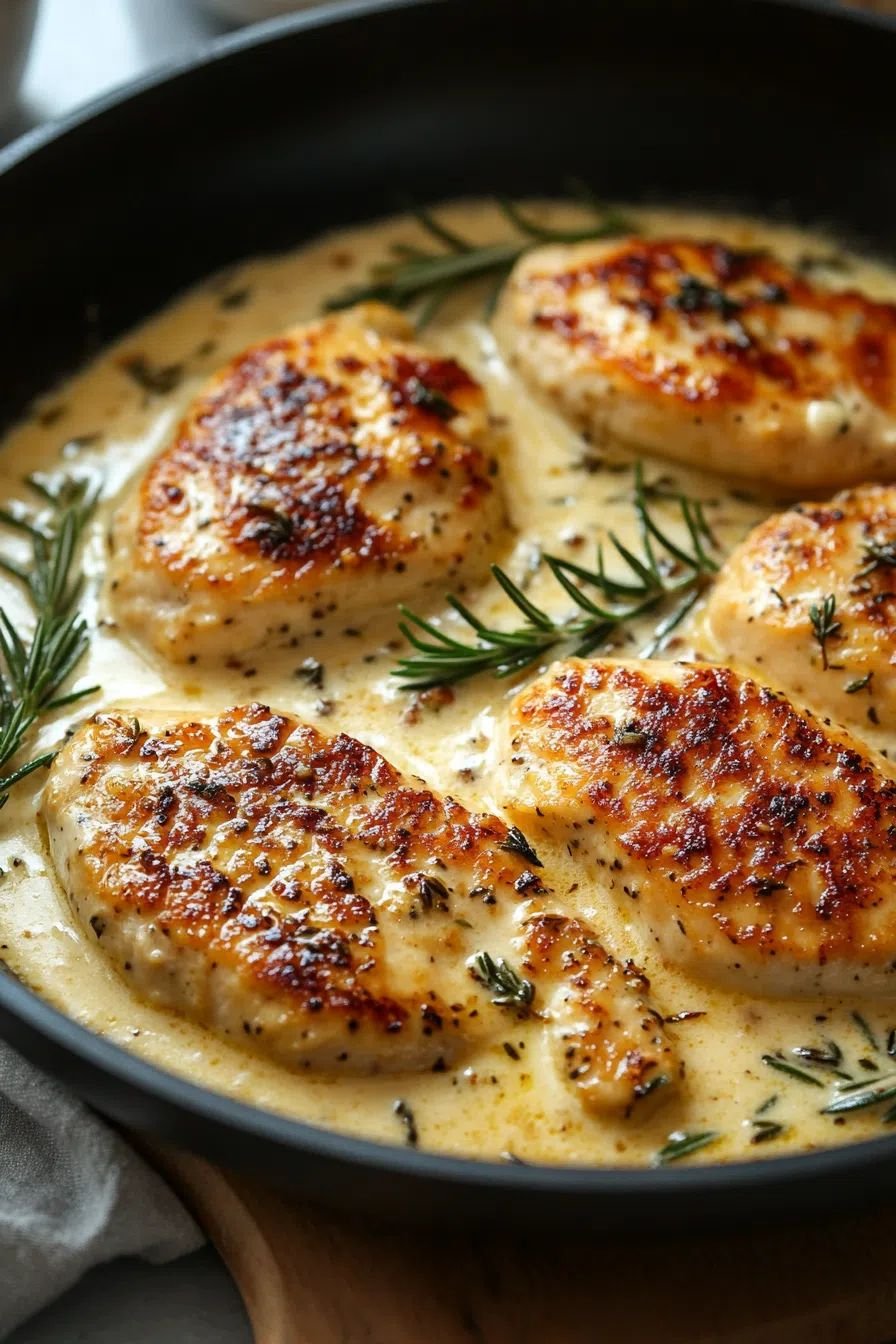
🍗 Creamy Rosemary Dijon Chicken
There are nights when I want dinner to feel a little fancy without actually making a complicated meal. Creamy Rosemary Dijon Chicken is exactly that kind of recipe.
I love how a few simple ingredients can turn ordinary chicken breasts into something that feels like it belongs on a restaurant menu. The chicken gets beautifully browned in butter, then everything comes together in the same skillet with shallots, garlic, Dijon mustard, white wine, honey, and fresh rosemary.
The finishing touch is what makes this recipe especially lovely: creamy whole-milk yogurt stirred into the sauce right at the end. It gives the sauce a silky texture and a gentle tang without making it feel overly heavy.
It’s the kind of dinner I’d happily make for a relaxed weekend meal, but it’s simple enough for a busy weeknight too.
⭐ Why You’ll Love This Creamy Rosemary Dijon Chicken
- One-skillet meal: Less cleanup makes dinner much easier.
- Big flavor from simple ingredients: Dijon, rosemary, garlic, and shallots do most of the work.
- Tender, juicy chicken: Browning first gives the chicken a beautiful savory crust.
- Creamy without being overly heavy: Whole-milk yogurt creates a rich, tangy sauce.
- Ready in about 40 minutes: Perfect when you want something special without spending hours cooking.
- Great for guests: The sauce makes simple chicken feel elegant.
- Wonderful with vegetables, bread, rice, or potatoes.
🛒 Ingredients You’ll Need
For the Chicken
- 4 boneless, skinless chicken breasts
- 1 teaspoon salt, divided
- 1/4 teaspoon freshly ground black pepper
- 2 tablespoons unsalted butter
For the Rosemary Dijon Sauce
- 1/4 cup finely chopped shallot
- 2 cloves garlic, minced
- 1/4 cup dry white wine
- 1 tablespoon Dijon mustard
- 2 teaspoons honey
- 2 teaspoons fresh rosemary, finely chopped, divided
- 1/2 cup whole-milk plain yogurt
For Garnishing
- Fresh rosemary
- Freshly cracked black pepper
- A drizzle of olive oil, optional
👩🍳 How to Make Creamy Rosemary Dijon Chicken
1. Prepare the Chicken
Pat the chicken breasts dry with paper towels.
Season both sides with salt and freshly ground black pepper.
If your chicken breasts are particularly thick, gently pound them to an even thickness. This helps them brown evenly and makes the cooking time more predictable.
2. Brown the Chicken
Place a large skillet over medium-high heat and add the butter.
Once the butter has melted and the skillet is hot, add the seasoned chicken.
Cook for approximately 3–4 minutes per side, or until the outside is deeply golden.
Don’t worry about cooking the chicken completely at this point. You’re building that gorgeous browned exterior and developing flavor in the skillet.
Transfer the chicken to a plate and set aside.
3. Sauté the Aromatics
Reduce the heat to medium.
Add the chopped shallot and minced garlic to the skillet.
Cook for about 1–2 minutes, stirring frequently, until the shallot begins to soften and the garlic becomes fragrant.
Those browned bits left behind by the chicken are going to become part of the sauce, so don’t clean the skillet first.
4. Deglaze the Pan
Pour in the dry white wine.
Use a wooden spoon or spatula to gently scrape the browned bits from the bottom of the skillet.
Let the wine simmer briefly as it reduces.
This simple step adds so much depth to the finished sauce.
5. Add the Dijon, Honey, and Rosemary
Stir in the Dijon mustard and honey.
The mustard gives the sauce its signature tang, while the honey adds just enough sweetness to balance it.
Add about half of the chopped fresh rosemary and stir everything together.
Let the sauce reach a gentle simmer.
6. Return the Chicken to the Skillet
Place the browned chicken breasts back into the skillet.
Reduce the heat to medium-low and cover the skillet.
Let the chicken simmer gently in the sauce for approximately 8–12 minutes, or until cooked through.
For food safety, the thickest part of the chicken should reach 165°F (74°C).
7. Make It Creamy
This is the important part.
Remove the skillet from the heat.
Let it cool for a moment, then gently stir the whole-milk yogurt into the sauce.
Adding the yogurt off the heat helps keep the sauce smooth and reduces the chance of curdling.
Spoon the creamy rosemary Dijon sauce generously over each chicken breast.
8. Garnish and Serve
Finish with the remaining fresh rosemary and a little freshly cracked black pepper.
Serve immediately while the chicken is warm and the sauce is silky.
And don’t forget to spoon plenty of that sauce over whatever side you serve alongside it.
🌿 Tips for the Best Rosemary Dijon Chicken
Don’t rush the browning
Give the chicken enough time to develop a golden exterior. That browned surface adds a huge amount of flavor to the finished dish.
Use fresh rosemary
Fresh rosemary has a brighter, more aromatic flavor than dried rosemary and works beautifully with Dijon.
Don’t boil the yogurt
Once the yogurt is added, keep the sauce away from high heat. Gentle handling helps maintain its creamy texture.
Use a good Dijon mustard
Since Dijon is one of the main flavors in this recipe, choose one you actually enjoy eating.
Scrape the skillet
Those little brown pieces left after cooking the chicken are packed with flavor. Deglazing the skillet incorporates them into the sauce.
Taste before serving
Depending on the Dijon and wine you use, you may want a tiny extra pinch of salt, a little more honey, or another squeeze of lemon for brightness.
🍷 Choosing a White Wine
A dry white wine works particularly well here.
Good options include:
- Sauvignon Blanc
- Pinot Grigio
- Unoaked Chardonnay
- Dry Riesling
If you don’t cook with wine, substitute chicken broth. The flavor will be slightly different, but the sauce will still be delicious.
🥘 What to Serve With Creamy Rosemary Dijon Chicken
This sauce is too good to leave behind, so I like serving the chicken with something that can soak it all up.
Comfort-food options
- Creamy mashed potatoes
- Roasted baby potatoes
- Buttered noodles
- Rice
- Crusty bread
Lighter options
- Steamed broccoli
- Roasted asparagus
- Green beans
- Sautéed spinach
- Simple arugula salad
- Roasted Brussels sprouts
For a cozy Sunday dinner, mashed potatoes are hard to beat.
For a lighter weeknight meal, roasted vegetables are perfect.
🍋 Easy Variations
Lemon Rosemary Dijon Chicken
Add a tablespoon of fresh lemon juice to the finished sauce for a brighter, more citrusy flavor.
Mushroom Dijon Chicken
Sauté sliced mushrooms after removing the chicken, then continue with the sauce as written.
Spinach Rosemary Chicken
Stir a couple of handfuls of fresh baby spinach into the sauce near the end and let it wilt before serving.
Creamier Version
For an even richer sauce, replace part of the yogurt with heavy cream.
Chicken Thigh Version
Boneless, skinless chicken thighs make a delicious substitute for chicken breasts. Adjust the cooking time as needed.
🥡 Storage and Reheating
Store leftover chicken and sauce in an airtight container in the refrigerator for up to 3 days.
Reheat gently in a skillet over low heat.
If the sauce becomes too thick, add a small splash of chicken broth or water while reheating.
Avoid bringing the yogurt-based sauce to a rapid boil because high heat can cause it to separate.
Can You Freeze It?
You can freeze the chicken, but yogurt-based sauces can change texture after freezing and thawing.
For the best result, if you’re intentionally preparing this dish for the freezer, consider freezing the cooked chicken separately and making a fresh sauce when you’re ready to serve.
❓ Frequently Asked Questions
Can I use chicken thighs instead of chicken breasts?
Absolutely. Boneless, skinless thighs are especially flavorful and forgiving. Just adjust the cooking time based on their size.
Can I use dried rosemary?
Yes. If fresh rosemary isn’t available, dried rosemary can work. Use less because dried herbs are more concentrated.
Can I make this without white wine?
Yes. Chicken broth is the easiest substitute.
Why do you add the yogurt at the end?
Adding yogurt after removing the skillet from the heat helps prevent it from curdling and keeps the sauce smooth and creamy.
Can I use Greek yogurt?
Yes, but full-fat Greek yogurt is preferable. It will create a thicker, tangier sauce, so you may want to loosen it with a splash of chicken broth.
Can I use heavy cream instead of yogurt?
Yes. Heavy cream will create a richer, more traditional cream sauce and will be less tangy than yogurt.
How do I know when the chicken is done?
The safest way is to check the thickest part with an instant-read thermometer. Chicken should reach 165°F (74°C).
How can I make the sauce thicker?
Let the sauce reduce gently before adding the yogurt. You can also simmer it briefly after removing the chicken, but avoid aggressively boiling the finished yogurt sauce.
Is this a good make-ahead dinner?
Yes. You can cook the chicken and sauce ahead of time and gently reheat it before serving. For the best texture, don’t overheat the sauce.
⏱️ Recipe at a Glance
Prep Time: 25 minutes
Cook Time: 15 minutes
Total Time: About 40 minutes
Servings: 4
Course: Main Course
❤️ Final Thoughts
This Creamy Rosemary Dijon Chicken is exactly the sort of recipe I keep coming back to when I want something comforting but not complicated.
The browned chicken, sweet little bites of shallot, fragrant rosemary, garlicky pan sauce, and sharp Dijon all work together beautifully. Then the yogurt brings everything together into a creamy sauce that begs to be spooned over potatoes, vegetables, or a thick slice of crusty bread.
It’s simple enough for a Tuesday night, but special enough for company.
And if you have someone at the table who usually thinks chicken breasts are boring, this might just change their mind.