
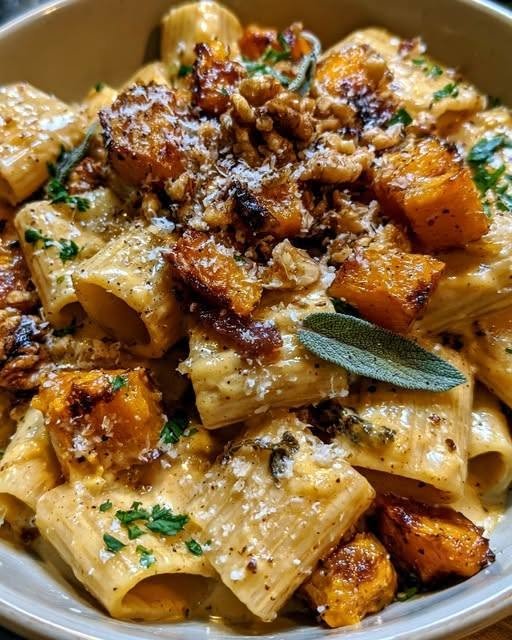
Butternut Squash & Sage Pasta for Cozy Autumn Nights
There are certain meals that just feel like autumn.
You know the ones.
The kind of dinner that makes the kitchen smell warm and buttery, the windows feel a little cozier, and everyone suddenly wants to sit around the table a little longer.
This Butternut Squash & Sage Pasta is exactly that kind of meal.
It’s creamy without needing a heavy cream sauce, sweet from roasted butternut squash, savory from garlic and Parmesan, and finished with crispy sage leaves that add the most wonderful earthy flavor.
I made this one on a cool evening when I wanted something comforting but didn’t want to spend hours cooking.
The squash was roasting while I got the pasta going, and before long the whole kitchen smelled like garlic, butter, and sage.
When I tossed everything together, the sauce clung to every piece of pasta.
I added a little extra Parmesan and a few crispy sage leaves on top.
My family gathered around the table, and within minutes someone asked, “Is there more?”
There wasn’t much left.
That’s always my favorite kind of recipe.
The kind that doesn’t need a big introduction.
You put the skillet in the middle of the table, everyone serves themselves, and suddenly a regular weeknight feels special.
If you’re looking for a cozy autumn dinner that’s simple enough for a weeknight but delicious enough to make for guests, this is one to keep.
🍂 Why You’ll Love This Butternut Squash & Sage Pasta
- Creamy and comforting
- Full of roasted squash flavor
- Crispy, fragrant sage
- Plenty of garlic and Parmesan
- Naturally sweet and savory
- Perfect for cool-weather dinners
- Easy enough for a weeknight
- Great vegetarian main dish
- Easy to customize
- Wonderful for leftovers
And that combination of butternut squash, brown butter, sage, and Parmesan?
It’s basically autumn in a bowl.
🛒 Ingredients
For the Butternut Squash
- 4 cups peeled and cubed butternut squash
- 2 tablespoons olive oil
- ½ teaspoon salt
- ½ teaspoon black pepper
- ½ teaspoon garlic powder
- ¼ teaspoon ground nutmeg
For the Pasta
- 12 ounces pasta, such as rigatoni, penne, fusilli, or fettuccine
- Salt, for the pasta water
- 1 cup reserved pasta water
For the Sage Butter Sauce
- 4 tablespoons unsalted butter
- 12–15 fresh sage leaves
- 3 cloves garlic, finely minced
- ½ cup finely grated Parmesan cheese
- ¼ teaspoon red pepper flakes, optional
- ½ teaspoon freshly ground black pepper
- 1 tablespoon fresh lemon juice
For Serving
- Extra Parmesan
- Fresh sage leaves
- Toasted walnuts or pecans, optional
- Freshly cracked black pepper
- A drizzle of olive oil
- Lemon wedges
🎃 Fresh or Pre-Cut Butternut Squash?
Both work.
Fresh butternut squash gives you beautiful caramelized edges when roasted.
But if you’re cooking on a busy evening, pre-cut squash is a fantastic shortcut.
You can even use frozen butternut squash.
If using frozen squash, roast it directly from frozen and allow a little extra time for browning.
👩🍳 How to Make Butternut Squash & Sage Pasta
1. Preheat the Oven
Preheat your oven to 425°F (220°C).
A hot oven is important because you want the squash to roast and caramelize rather than simply steam.
🎃 2. Season the Butternut Squash
Place the cubed butternut squash on a large baking sheet.
Drizzle with olive oil.
Add:
- Salt
- Black pepper
- Garlic powder
- Nutmeg
Toss until everything is evenly coated.
Spread the squash into a single layer.
Don’t crowd the pan.
🔥 3. Roast the Squash
Roast for approximately 25–35 minutes, turning the squash halfway through.
You’re looking for tender centers and caramelized golden edges.
Those browned edges are where so much of the flavor comes from.
When the squash is finished, remove it from the oven.
🍝 4. Cook the Pasta
While the squash is roasting, bring a large pot of salted water to a boil.
Cook the pasta according to the package directions until al dente.
Before draining, reserve about 1 cup of pasta water.
Drain the pasta and set it aside.
Don’t rinse it.
The starch on the pasta helps the sauce cling beautifully.
🧈 5. Make the Sage Butter
While the pasta is cooking, melt the butter in a large skillet over medium heat.
Add the fresh sage leaves.
Let them cook for approximately 2–3 minutes, turning once, until the leaves become crisp and fragrant.
Carefully remove the crispy sage leaves and place them on a small plate lined with paper towel.
Leave the sage-infused butter in the skillet.
🧄 6. Add the Garlic
Reduce the heat slightly.
Add the minced garlic to the butter.
Cook for approximately 30–60 seconds.
You want it fragrant but not deeply browned.
Add the red pepper flakes if you’re using them.
🥣 7. Build the Sauce
Add approximately 1½ cups of roasted butternut squash to the skillet.
Mash it gently with a fork or potato masher.
Pour in about ½ cup of reserved pasta water.
Stir until the squash and butter form a creamy sauce.
Add more pasta water a little at a time if needed.
The sauce should be silky enough to coat the back of a spoon.
🍝 8. Add the Pasta
Add the drained pasta directly to the skillet.
Toss everything together.
Add more pasta water as needed.
The starch from the pasta water helps create that creamy texture without requiring a huge amount of cream.
🧀 9. Add Parmesan
Turn the heat to low.
Add the Parmesan cheese and black pepper.
Toss gently until the cheese melts into the sauce.
Taste.
Add more salt if necessary.
Then add the lemon juice.
That little bit of acidity keeps the sauce from tasting too heavy.
🍂 10. Add the Roasted Squash
Fold the remaining roasted butternut squash into the pasta.
Be gentle.
You want some squash to blend into the sauce while keeping some golden roasted pieces intact.
That’s what gives the finished dish such a beautiful texture.
🌿 11. Garnish and Serve
Divide the pasta among bowls.
Top with:
- Crispy sage leaves
- Extra Parmesan
- Freshly cracked black pepper
- Toasted walnuts or pecans, if desired
I also love adding a tiny drizzle of olive oil.
Serve immediately.
⭐ Tips for the Best Butternut Squash Pasta
Roast the squash until golden
Don’t remove it as soon as it’s merely tender.
Those caramelized edges add so much flavor.
Don’t overcrowd the pan
Give the squash room to roast.
Save your pasta water
This is one of the most important ingredients in the sauce.
Use fresh sage
Fresh sage has a much more fragrant flavor than dried sage for this recipe.
Add Parmesan off the heat
This helps it melt smoothly into the sauce.
Add lemon at the end
The acidity brightens the entire dish.
🧈 How to Brown the Butter
If you want an even deeper flavor, take the butter a little further.
After adding the sage, continue cooking until the butter begins to foam and develops a warm, nutty aroma.
You’ll notice tiny golden-brown specks forming at the bottom of the skillet.
That’s browned butter.
Just be careful not to burn it.
Once it smells nutty and the color turns golden, move quickly to the next step.
🌰 Add Toasted Nuts
Butternut squash and nuts are a beautiful combination.
Try:
- Walnuts
- Pecans
- Hazelnuts
- Pumpkin seeds
Toast them in a dry skillet for a few minutes until fragrant.
Roughly chop them and sprinkle them over the pasta before serving.
The crunch is wonderful against the creamy sauce.
🧀 Make It Extra Cheesy
If you love a cheesy pasta, add:
- Parmesan
- Pecorino Romano
- Fontina
- Goat cheese
- Ricotta
A spoonful of goat cheese stirred into the warm sauce gives it a lovely tangy creaminess.
🌶️ Make It Spicy
The sweetness of butternut squash works surprisingly well with heat.
Add:
- Red pepper flakes
- Calabrian chili paste
- Cayenne
- Crushed chili
- Hot honey for serving
Start small.
You can always add more.
🥬 Add Greens
Want to add some vegetables?
Stir in:
Spinach
Add a couple of handfuls during the final few minutes.
Kale
Finely chop and sauté it before adding the pasta.
Arugula
Fold it in right before serving.
The heat from the pasta will soften it slightly.
🍗 Add Chicken
For a heartier meal, add sliced grilled or roasted chicken.
Season it simply with:
- Salt
- Black pepper
- Garlic powder
- Italian seasoning
You can also use leftover rotisserie chicken.
🥓 Add Crispy Bacon
Crispy bacon adds a smoky, salty contrast to the sweet squash.
Cook bacon until crisp, crumble it, and sprinkle it over the finished pasta.
For a vegetarian version, crispy toasted walnuts provide a similar salty-crunchy contrast.
🍄 Add Mushrooms
Sauté sliced mushrooms in a little olive oil or butter until golden.
Add them to the finished pasta.
Their earthy flavor pairs beautifully with sage and butternut squash.
🍝 Best Pasta Shapes
Almost any pasta will work, but some shapes are particularly good at holding onto the sauce.
Try:
- Rigatoni
- Penne
- Fusilli
- Farfalle
- Orecchiette
- Fettuccine
- Tagliatelle
- Shells
I especially love rigatoni because the creamy squash sauce gets inside the tubes.
🥛 Can I Make It Creamier?
Absolutely.
Add ¼–½ cup heavy cream after blending the squash with the pasta water.
You can also use:
- Half-and-half
- Whole milk
- Cream cheese
- Mascarpone
- Ricotta
For a lighter creamy sauce, Greek yogurt can work, but stir it in after removing the skillet from the heat.
🍋 Why Add Lemon?
This pasta is rich and naturally sweet.
A small amount of lemon juice gives it balance.
You don’t want the pasta to taste strongly lemony.
You simply want enough acidity to brighten the butter, Parmesan, and squash.
🍽️ What to Serve With Butternut Squash Pasta
This pasta can absolutely stand on its own.
But if you’re making dinner for family or guests, serve it with:
- Simple green salad
- Arugula salad
- Garlic bread
- Roasted Brussels sprouts
- Green beans
- Steamed broccoli
- Sautéed spinach
- Crusty bread
A crisp salad with lemon vinaigrette is my favorite pairing.
🍷 Dinner Party Version
If you’re serving this to guests, keep the presentation simple.
Pile the pasta into a large serving bowl.
Scatter crispy sage leaves over the top.
Add Parmesan, toasted walnuts, and freshly cracked pepper.
Finish with a few small roasted squash pieces.
It looks beautiful without requiring any complicated plating.
🧊 How to Store Leftovers
Let the pasta cool before transferring it to an airtight container.
Refrigerate for up to 3–4 days.
The sauce will thicken as it sits.
That’s completely normal.
🔥 How to Reheat
The best way to reheat this pasta is gently on the stovetop.
Place it in a skillet over medium-low heat.
Add a splash of:
- Water
- Milk
- Chicken broth
- Vegetable broth
Stir gently until warmed through.
You can also microwave individual portions in short intervals.
Add a little liquid before reheating to loosen the sauce.
❄️ Can You Freeze Butternut Squash Pasta?
Yes, although the texture of the sauce may change slightly after freezing.
For best results, freeze the roasted squash sauce separately if possible and cook fresh pasta when you’re ready to serve.
If freezing the finished pasta, cool it completely and store it in an airtight freezer-safe container.
Use within 2–3 months for best quality.
❓ Frequently Asked Questions
Can I use frozen butternut squash?
Yes. Frozen squash is a convenient option. Roast it until tender and browned.
Do I have to peel butternut squash?
No if you’re using pre-cut squash, but fresh whole squash should be peeled for this recipe.
Can I use pumpkin instead?
Yes. Pumpkin can be substituted for some or all of the butternut squash.
Can I use dried sage?
You can, but fresh sage is much better for the crispy sage garnish and infused butter.
Can I use another type of pasta?
Absolutely. Almost any pasta shape works.
Can I make this dairy-free?
Yes. Use a plant-based butter and dairy-free Parmesan alternative.
Can I make this gluten-free?
Yes. Use your favorite gluten-free pasta and verify that your other packaged ingredients are gluten-free.
Can I make this vegan?
Yes. Use vegan butter, vegan Parmesan, and a plant-based pasta.
Can I add meat?
Definitely. Chicken, bacon, Italian sausage, and pancetta all work well.
Why is my sauce too thick?
Add reserved pasta water a few tablespoons at a time until it reaches your preferred consistency.
Why is my sauce watery?
Let it simmer gently for a minute or two while stirring. The starch from the pasta will also help thicken it.
Can I make the squash ahead?
Yes. Roast the squash up to 2–3 days ahead and refrigerate it until you’re ready to make the pasta.
Can I make this ahead for guests?
Yes. Prepare the squash and sauce ahead of time, then cook the pasta and finish everything shortly before serving.
Can I use sweet potato instead of butternut squash?
Absolutely. Roasted sweet potato makes a delicious variation.
📝 Recipe at a Glance
Recipe: Butternut Squash & Sage Pasta
Prep Time: 15 minutes
Cook Time: 35 minutes
Total Time: About 50 minutes
Servings: 4–6
Category: Main Course
Cuisine: Italian-inspired
Method: Oven + Stovetop
Ingredients
Roasted Squash
- 4 cups cubed butternut squash
- 2 tablespoons olive oil
- ½ teaspoon salt
- ½ teaspoon black pepper
- ½ teaspoon garlic powder
- ¼ teaspoon nutmeg
Pasta
- 12 ounces pasta
- Salt, for cooking water
- 1 cup reserved pasta water
Sage Butter Sauce
- 4 tablespoons butter
- 12–15 fresh sage leaves
- 3 cloves garlic
- ½ cup Parmesan
- ¼ teaspoon red pepper flakes, optional
- ½ teaspoon black pepper
- 1 tablespoon lemon juice
Instructions
- Preheat oven to 425°F (220°C).
- Toss butternut squash with olive oil and seasonings.
- Roast for 25–35 minutes, turning halfway.
- Cook pasta in salted water until al dente.
- Reserve 1 cup pasta water and drain.
- Melt butter in a skillet.
- Add sage and cook until crisp.
- Remove sage and set aside.
- Add garlic to the sage butter and cook briefly.
- Add about 1½ cups roasted squash.
- Mash gently and add ½ cup pasta water.
- Add cooked pasta and toss.
- Add Parmesan and black pepper.
- Stir in lemon juice.
- Fold in remaining roasted squash.
- Garnish with crispy sage, Parmesan, and toasted nuts.
- Serve warm.
❤️ A Bowl Full of Autumn
There are some recipes that simply taste good.
And then there are recipes that make you feel something.
This Butternut Squash & Sage Pasta is definitely the second kind for me.
It’s the dinner I want when the weather starts cooling down and I want something warm without making anything complicated.
The roasted squash becomes soft and caramelized.
The butter picks up the flavor of the sage.
The garlic brings everything together.
Then Parmesan melts into the sauce and coats every piece of pasta.
And those crispy sage leaves on top?
Don’t skip them.
They’re one of my favorite parts.
When I made this for my family, I thought we’d have enough leftovers for the next day.
That plan lasted about ten minutes.
Everyone loved it.
And I completely understood why.
It’s creamy, cozy, slightly sweet, savory, cheesy, and full of those warm flavors that make autumn dinners feel special.
So put on a sweater, roast some squash, fry a few sage leaves, and make yourself a big bowl of this pasta.
Then sit down somewhere cozy and enjoy it while it’s hot.
Because sometimes the best way to welcome autumn is with a bowl of pasta, a little Parmesan, and the smell of sage filling the kitchen.