
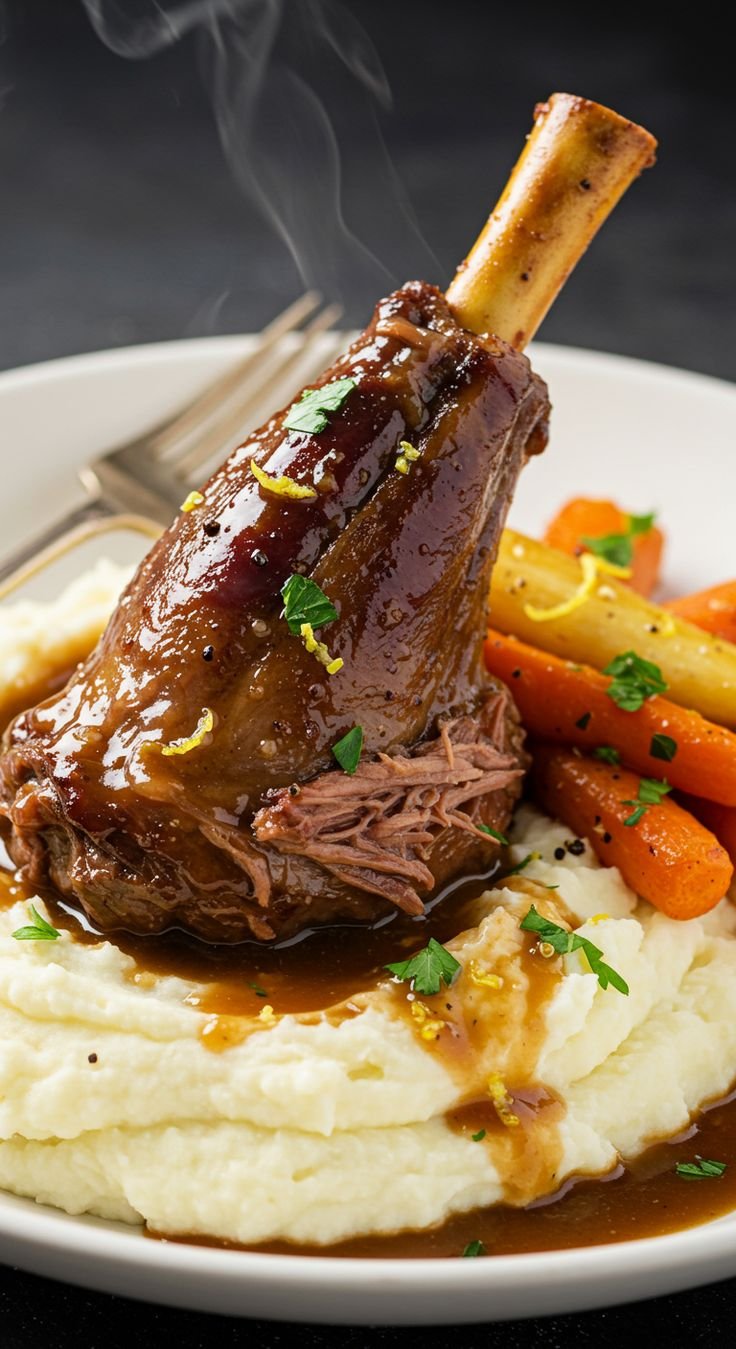
Ale-Braised Lamb Shanks with Carrots and Parsnips
There are some dinners that feel like they were made for a slow weekend.
The kind where you don’t rush.
You brown the meat, let the vegetables soften, pour in something rich and flavorful, and then let the oven do most of the work.
These Ale-Braised Lamb Shanks with Carrots and Parsnips are exactly that kind of meal.
The lamb shanks are deeply browned before being slowly braised with onions, garlic, carrots, parsnips, herbs, and a malty ale. After a couple of hours in the oven, the meat becomes incredibly tender and the vegetables soak up all those wonderful savory flavors.
I made this on a chilly weekend when I wanted something that would make the whole house smell amazing.
I remember standing over the Dutch oven as the lamb browned, watching those dark golden bits build up on the bottom of the pot.
Then came the ale.
The moment it hit the hot pan, everything started smelling rich, earthy, and slightly sweet.
I added the vegetables and herbs, returned the lamb to the pot, covered everything, and let it slowly braise.
By the time dinner was ready, the lamb was practically falling from the bone.
We served it with the tender carrots and parsnips and spooned plenty of the rich braising sauce over everything.
It was the kind of meal where everyone gets quiet for the first few minutes because they’re too busy enjoying it.
And honestly, those are my favorite dinners.
Recipe at a Glance
Prep Time: 25 minutes
Cook Time: 2½–3 hours
Total Time: About 3 hours 15 minutes
Servings: 4
Course: Main Course
Cuisine: Comfort Food / British-inspired
Method: Dutch oven
Why You’ll Love This Recipe
Lamb becomes incredibly tender
Rich, savory ale-braised sauce
Sweet, earthy carrots and parsnips
Perfect cold-weather comfort food
Mostly hands-off cooking
Excellent for Sunday dinner
Can be prepared ahead
Leftovers taste even better
Wonderful served over mashed potatoes
Ingredients
For the Lamb
4 meaty lamb shanks
1½ teaspoons salt
1 teaspoon freshly ground black pepper
2 tablespoons olive oil
1 tablespoon all-purpose flour, optional
For the Braising Vegetables
1 large yellow onion, diced
4 cloves garlic, minced
3 medium carrots, cut into large pieces
3 medium parsnips, peeled and cut into large pieces
2 tablespoons tomato paste
1½ cups amber or brown ale
2 cups beef or lamb stock
2 sprigs fresh rosemary
4 sprigs fresh thyme
2 bay leaves
½ teaspoon smoked paprika, optional
1 teaspoon Worcestershire sauce, optional
For Finishing
1 tablespoon butter
2 tablespoons fresh parsley, chopped
Salt and black pepper, to taste
How to Make Ale-Braised Lamb Shanks
Step 1: Prepare the Lamb
Take the lamb shanks out of the refrigerator about 20–30 minutes before cooking.
Pat them thoroughly dry with paper towels.
Season generously on all sides with salt and black pepper.
If you’re using flour, lightly dust the shanks and shake off the excess.
The flour is optional, but it can help the braising liquid thicken slightly.
Step 2: Brown the Lamb
Preheat the oven to 350°F (175°C).
Heat the olive oil in a large oven-safe Dutch oven over medium-high heat.
Once hot, add the lamb shanks.
Don’t overcrowd the pot. Brown them in batches if necessary.
Sear for approximately 3–5 minutes per side, turning until the lamb develops a deep golden-brown crust.
This step is worth taking your time with.
The browned surface adds enormous flavor to the finished dish.
Transfer the lamb to a plate.
Step 3: Cook the Aromatics
Reduce the heat to medium.
Add the onion and cook for about 5 minutes, stirring occasionally.
Add the carrots and parsnips.
Cook for another 5–7 minutes, allowing the vegetables to begin caramelizing.
Add the garlic and cook for about 30 seconds.
Step 4: Add the Tomato Paste
Stir in the tomato paste.
Cook for approximately 1–2 minutes, stirring frequently.
The tomato paste should become slightly darker and fragrant.
Step 5: Deglaze With Ale
Slowly pour the ale into the Dutch oven.
Use a wooden spoon to scrape the browned bits from the bottom of the pot.
Those caramelized pieces are full of flavor.
Let the ale simmer for about 3–5 minutes so it reduces slightly.
Step 6: Add the Stock and Herbs
Pour in the beef or lamb stock.
Add:
Rosemary
Thyme
Bay leaves
Smoked paprika, if using
Worcestershire sauce, if using
Stir gently.
Step 7: Return the Lamb
Place the browned lamb shanks back into the pot.
The liquid should come roughly halfway to two-thirds of the way up the lamb.
You don’t need to completely submerge the shanks.
Bring everything to a gentle simmer.
Step 8: Braise in the Oven
Cover the Dutch oven tightly with its lid.
Transfer it to the oven.
Braise for approximately 2–2½ hours.
Check the lamb after about 2 hours.
The meat should be very tender and should pull away easily when tested with a fork.
If it still feels firm, continue cooking for another 20–30 minutes.
Low-and-slow braising is what gives lamb shanks their fall-apart texture. Similar lamb-shank recipes commonly use roughly 1½–2½ hours of covered oven cooking, depending on the temperature and size of the shanks.
Step 9: Finish the Sauce
Carefully remove the lamb shanks from the pot.
Place them on a plate and cover loosely with foil.
Remove the rosemary stems and bay leaves.
Place the Dutch oven back on the stovetop.
Simmer the braising liquid uncovered for approximately 10–15 minutes, or until it thickens slightly.
For an especially smooth sauce, strain it before reducing.
Taste and adjust the seasoning.
Step 10: Add Butter
Turn the heat to low.
Stir in the butter.
This gives the sauce a silky, glossy finish.
Step 11: Serve
Return the lamb shanks to the sauce or spoon the sauce directly over them.
Scatter fresh parsley over the top.
Serve with the carrots and parsnips.
The Secret to Tender Lamb Shanks
Don’t rush the braising process.
Lamb shanks contain connective tissue that needs time to break down.
If the lamb is still tough after two hours, it doesn’t necessarily mean you’ve done anything wrong.
It may simply need more time.
Continue braising until the meat is fork-tender.
My Best Tips
Dry the Lamb Before Searing
Moisture prevents proper browning.
Pat the shanks thoroughly dry before seasoning.
Don’t Crowd the Pot
Give each shank room to brown.
If necessary, sear them in batches.
Brown Them Deeply
A beautiful brown crust creates a much richer sauce.
Scrape the Bottom
When adding the ale, scrape up all those browned bits.
Don’t Boil the Lamb Aggressively
A gentle braise is better than a hard boil.
Give It Time
If the lamb isn’t tender, keep cooking.
Lamb shanks reward patience.
What Kind of Ale Should I Use?
An amber ale, brown ale, or malty English-style ale works beautifully.
Look for something with rich malt character rather than an aggressively bitter beer.
Avoid extremely bitter IPAs because their bitterness can become concentrated during reduction.
Can I Use Dark Ale?
Yes.
A dark ale can create a deeper, richer sauce.
Just keep in mind that very dark or highly roasted beers may make the sauce more intense.
Can I Use Guinness?
Yes.
Guinness or another dry stout will give the sauce a darker, roasted flavor.
It will taste different from an amber ale but can be delicious.
Can I Use Non-Alcoholic Ale?
Absolutely.
A good non-alcoholic amber or dark ale can work well.
The flavor will be slightly different, but you’ll still get the malty character.
Can I Make This Without Alcohol?
Yes.
Replace the ale with additional beef or lamb stock.
For extra complexity, add a small splash of Worcestershire sauce or a teaspoon of balsamic vinegar.
Can I Use Red Wine Instead?
Yes.
Red wine is a classic braising liquid for lamb shanks.
The resulting flavor will be fruitier and more wine-forward than the ale version.
Can I Use Chicken Stock?
Yes.
Beef or lamb stock gives the richest flavor, but chicken stock works if that’s what you have.
Can I Use Boneless Lamb?
You can, but lamb shanks are particularly well suited to this cooking method because of their connective tissue and bone.
Boneless lamb will usually require a different cooking time.
Can I Use Lamb Shoulder?
Yes.
Lamb shoulder is another excellent cut for slow braising.
Cut it into large pieces and adjust the cooking time according to size.
Can I Add Celery?
Absolutely.
Add 2 chopped celery stalks with the carrots and parsnips.
It adds another layer of savory flavor.
Can I Add Mushrooms?
Yes.
Sauté mushrooms separately and add them toward the end.
This keeps them from becoming overly soft.
Can I Add Potatoes?
Definitely.
Add large chunks of potatoes during the final hour of cooking.
Alternatively, serve the lamb over mashed potatoes.
Can I Add Pearl Onions?
Absolutely.
Pearl onions are wonderful with slow-braised lamb.
Add them during the final hour so they retain some texture.
Can I Add Rosemary?
Yes.
Rosemary and lamb are a classic combination.
Fresh thyme is also excellent.
Can I Use Dried Herbs?
Yes.
As a general starting point, use about one-third as much dried herb as fresh.
Can I Make This in a Slow Cooker?
Yes.
Brown the lamb and sauté the vegetables first.
Transfer everything to the slow cooker and cook on LOW for approximately 7–8 hours, or until the lamb is fork-tender.
Reduce the sauce separately afterward if needed.
Can I Make It on the Stovetop?
Yes.
Use a heavy Dutch oven.
Bring the liquid to a very gentle simmer, cover, and cook over low heat for approximately 2–3 hours, checking occasionally.
Can I Make It in an Instant Pot?
Yes.
Brown the lamb using the sauté function.
Add the vegetables, ale, stock, and herbs.
Pressure cook according to your appliance’s lamb-shank settings, then allow natural pressure release when appropriate.
Finish by reducing the sauce using the sauté function.
Can I Make This Ahead?
Absolutely.
In fact, this is an excellent make-ahead meal.
Cook the lamb completely, cool it, and refrigerate it in the braising liquid.
The flavors often become even deeper after resting overnight.
How Long Does It Keep?
Store leftovers in the refrigerator for up to 3–4 days.
Can I Freeze Lamb Shanks?
Yes.
Cool the lamb and sauce completely before transferring them to freezer-safe containers.
Freeze for approximately 2–3 months for best quality.
How Do I Reheat It?
Reheat gently in a covered Dutch oven or saucepan over low heat.
Add a splash of stock if the sauce has become too thick.
You want the lamb to warm slowly without drying out.
What Should I Serve With Ale-Braised Lamb Shanks?
This dish loves something creamy or starchy to soak up the sauce.
Try:
Mashed potatoes
Creamy polenta
Mashed cauliflower
Buttered noodles
Crusty bread
Roasted potatoes
Mashed parsnips
Cauliflower mash
My favorite is simple mashed potatoes with plenty of the ale sauce spooned over everything.
Easy Variations
Garlic Herb Lamb Shanks
Add extra garlic, rosemary, and thyme.
Mushroom Ale-Braised Lamb
Add sautéed mushrooms to the finished sauce.
Stout-Braised Lamb
Replace the amber ale with stout for a darker, richer flavor.
Honey Herb Lamb
Add a small amount of honey near the end to balance a particularly bitter ale.
Mediterranean Lamb Shanks
Replace the ale with red wine and add rosemary, oregano, garlic, and tomatoes.
Spicy Ale-Braised Lamb
Add smoked paprika, chili flakes, and a pinch of cayenne.
Frequently Asked Questions
Why is my lamb still tough?
It probably needs more cooking time.
Lamb shanks become tender when the connective tissue has had enough time to break down.
Why is my sauce bitter?
The ale may be too bitter, especially if you’re using a highly hopped beer.
Next time, choose a maltier amber or brown ale.
Why isn’t my sauce thick?
Remove the lid and simmer the braising liquid uncovered until it reduces.
You can also use a small amount of flour or cornstarch slurry if desired.
Can I blend the vegetables into the sauce?
Yes.
Remove the lamb and herbs, then blend the vegetables and braising liquid until smooth.
This makes a wonderfully rich sauce.
Should the lamb be completely submerged?
No.
The liquid should generally come partway up the shanks.
The covered pot and gentle steam help cook the exposed portion as well.
Can I use baby carrots?
Yes.
Add them later in the cooking process so they don’t become overly soft.
Approximate Nutrition
Per serving, assuming four servings and excluding optional mashed potatoes:
Calories: approximately 600–700
Protein: approximately 40–45g
Fat: approximately 35–45g
Total Carbohydrates: approximately 20–25g
Fiber: approximately 5–6g
Net Carbohydrates: approximately 15–20g
Nutrition is an estimate and will vary depending on the size and fat content of the lamb shanks, ale, stock, and vegetables.
Final Thoughts
There is something special about a meal that asks you to slow down.
These Ale-Braised Lamb Shanks with Carrots and Parsnips aren’t a 20-minute dinner.
And that’s exactly why I love them.
You start by giving the lamb a beautiful brown crust.
Then you soften the onions and vegetables.
You pour in the ale and scrape up every flavorful browned piece from the bottom of the pot.
The herbs go in.
The lamb goes back.
The lid goes on.
And then you let time do its thing.
A couple of hours later, the transformation is incredible.
The lamb is tender enough to pull apart with a fork.
The carrots are soft and sweet.
The parsnips have absorbed the rich braising liquid.
And the sauce has that deep, savory flavor that makes you want to grab a piece of bread and wipe the pot clean.
This is the kind of meal I love making on weekends when I have nowhere to rush off to.
I’ll put the Dutch oven in the oven, tidy up the kitchen, and let that incredible smell slowly fill the house.
By dinner time, everyone knows something good is happening.
I also love that this recipe can be made ahead.
If you’re having guests, you can prepare the lamb earlier in the day or even the day before, then gently reheat it before serving.
That makes it especially nice for a relaxed dinner party.
And don’t underestimate the vegetables.
The carrots and parsnips aren’t just there for decoration.
They become incredibly flavorful as they cook alongside the lamb, absorbing the ale, stock, garlic, herbs, and all those delicious juices.
Serve everything over creamy mashed potatoes and spoon the sauce generously over the top.
That’s comfort food.
Warm.
Rich.
Tender.
Savory.
And deeply satisfying.
So if you have a lazy weekend coming up and you’re craving something that feels hearty and homemade, pick up some lamb shanks and a good malty ale.
Give the lamb a proper sear.
Let it braise slowly.
And don’t rush the final step.
When the meat is practically falling from the bone, you’ll know it was worth every minute.
This is the kind of dinner that makes the kitchen smell amazing, fills the table with warmth, and gives everyone a reason to linger a little longer after the meal.
And honestly, those are the dinners I remember most. 🍖🥕🌿