
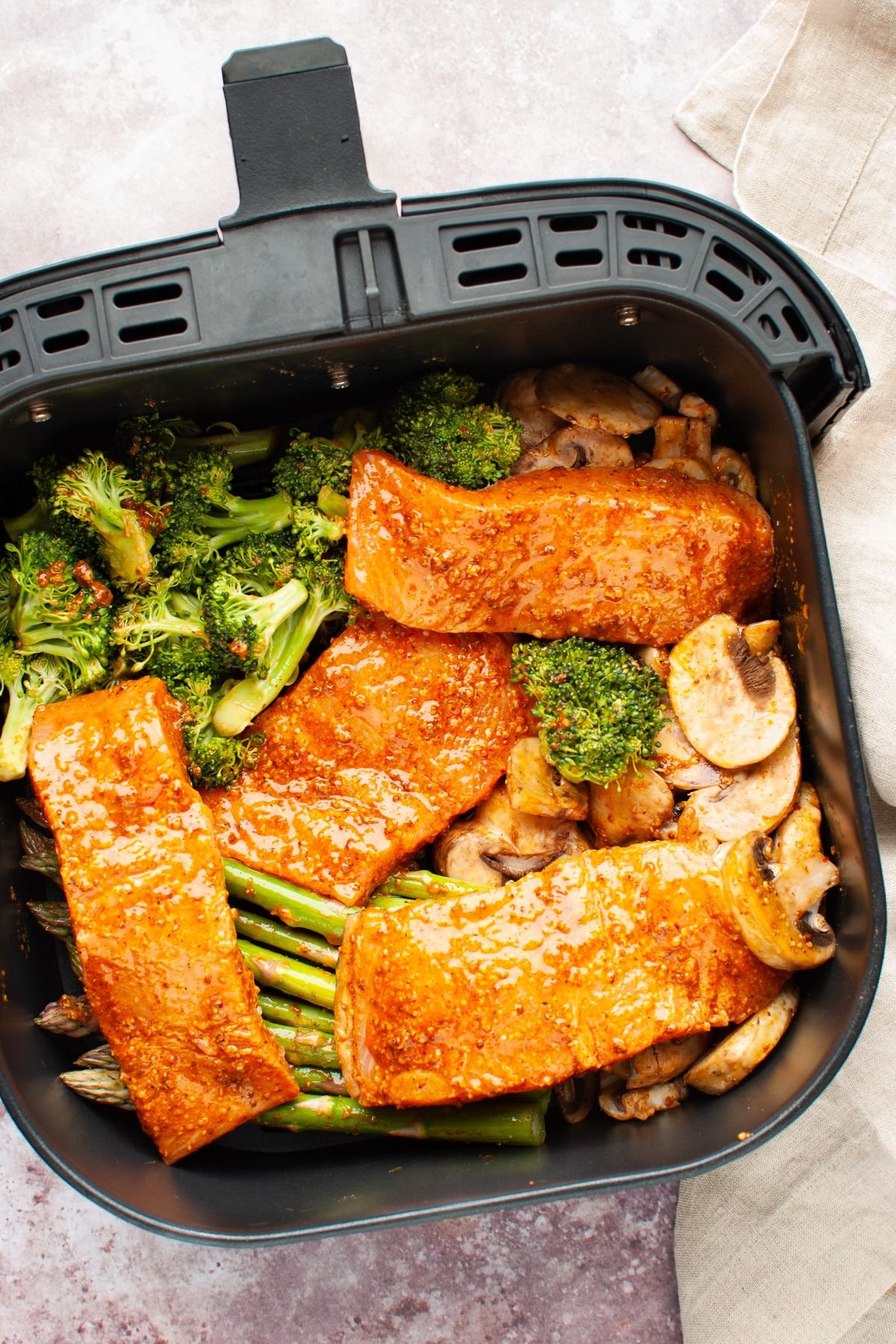
Air Fryer Salmon and Vegetables
This Air Fryer Salmon and Vegetables recipe is a quick, healthy, and flavorful meal made with tender salmon fillets and colorful vegetables. Everything cooks together in the air fryer with olive oil, garlic, lemon, and simple seasonings. It is perfect for a nutritious weeknight dinner with minimal preparation and cleanup.
Recipe Information
-
Prep Time: 10 minutes
-
Cook Time: 12–15 minutes
-
Total Time: 22–25 minutes
-
Servings: 2
-
Course: Main Course
-
Cuisine: American
-
Cooking Method: Air Fryer
-
Temperature: 390°F (200°C)
Ingredients
For the Salmon
-
2 salmon fillets, approximately 5–6 ounces each
-
1 tablespoon olive oil
-
1 teaspoon lemon juice
-
½ teaspoon garlic powder
-
½ teaspoon paprika
-
½ teaspoon dried Italian seasoning
-
¼ teaspoon salt
-
¼ teaspoon black pepper
For the Vegetables
-
1 cup broccoli florets
-
1 medium zucchini, sliced
-
1 red bell pepper, cut into strips
-
½ red onion, cut into wedges
-
1 tablespoon olive oil
-
½ teaspoon garlic powder
-
¼ teaspoon paprika
-
¼ teaspoon salt
-
⅛ teaspoon black pepper
For Garnish
-
1 tablespoon fresh chopped parsley
-
2 lemon wedges
-
Extra lemon juice, if desired
Instructions
Step 1: Prepare the Salmon
Pat the salmon fillets dry with paper towels. Removing excess moisture helps the seasonings stick and encourages better browning.
Step 2: Season the Salmon
In a small bowl, combine olive oil, lemon juice, garlic powder, paprika, Italian seasoning, salt, and black pepper. Brush the mixture evenly over both salmon fillets.
Step 3: Prepare the Vegetables
Wash and dry the broccoli, zucchini, bell pepper, and red onion. Cut them into similar-sized pieces so they cook more evenly.
Step 4: Season the Vegetables
Place the vegetables in a large mixing bowl. Add olive oil, garlic powder, paprika, salt, and black pepper. Toss until all the vegetables are lightly coated.
Step 5: Preheat the Air Fryer
Preheat the air fryer to 390°F (200°C) for approximately 3 minutes, if required by your appliance.
Step 6: Cook the Vegetables
Place the seasoned vegetables in the air fryer basket in a single layer. Cook for approximately 5 minutes, shaking the basket halfway through.
Step 7: Add the Salmon
Move the vegetables slightly to create space for the salmon fillets. Place the salmon in the basket with the skin side down, if the skin is still attached.
Step 8: Air Fry Everything
Continue cooking at 390°F (200°C) for approximately 7–10 minutes, depending on the thickness of the salmon. The vegetables should be tender with lightly browned edges, and the salmon should reach an internal temperature of 145°F (63°C) for the standard food-safety recommendation.
Step 9: Check for Doneness
Check the thickest part of the salmon with a food thermometer. If the vegetables need additional browning, remove the salmon once cooked and air fry the vegetables for another 2–3 minutes.
Step 10: Garnish and Serve
Transfer the salmon and vegetables to serving plates. Sprinkle with fresh parsley and squeeze fresh lemon juice over everything. Serve immediately while warm.
Questions & Answers
Q1: What type of salmon is best for this recipe?
Fresh Atlantic salmon, sockeye salmon, or coho salmon all work well. Choose evenly sized fillets for more consistent cooking.
Q2: Can I use frozen salmon?
Yes. Thaw the salmon completely in the refrigerator before cooking and pat it dry. This helps the seasoning stick and allows the fish to cook evenly.
Q3: Do I need to remove the salmon skin?
No. You can cook salmon with the skin on. Place it skin-side down in the air fryer to help protect the flesh from overcooking.
Q4: What temperature should I use for air fryer salmon?
A temperature of 390°F (200°C) works well for cooking salmon and vegetables together.
Q5: How long does salmon take in the air fryer?
Most 5–6-ounce fillets take approximately 7–10 minutes after the vegetables have started cooking. Thicker pieces may require additional time.
Q6: How do I know when salmon is fully cooked?
Use a food thermometer to check the thickest part. The standard food-safety recommendation is 145°F (63°C). The flesh should also appear opaque and separate easily with a fork.
Q7: Can I use different vegetables?
Absolutely. Asparagus, green beans, carrots, cauliflower, Brussels sprouts, and mushrooms are excellent alternatives.
Q8: Can I use baby potatoes?
Yes, but potatoes take longer to cook than most vegetables. Cut them into small pieces and air fry them for approximately 10–15 minutes before adding the salmon.
Q9: Can I use broccoli and carrots together?
Yes. Cut the carrots into thin slices or small pieces so they cook at a similar rate to the broccoli.
Q10: Do I need to preheat the air fryer?
Preheating is recommended for more consistent cooking, although some air fryer models do not require it.
Q11: Can I cook everything at the same time?
Yes, if your vegetables are cut into small pieces and your salmon fillets are not too thick. However, starting the vegetables a few minutes earlier helps prevent undercooked vegetables.
Q12: Why is my salmon dry?
Salmon can become dry if it is cooked for too long. Check the internal temperature with a thermometer and adjust the cooking time according to the thickness of the fillets.
Q13: Can I make this recipe without olive oil?
Yes. You can use avocado oil or another cooking oil suitable for high temperatures.
Q14: Can I use fresh garlic instead of garlic powder?
Yes. Finely minced fresh garlic adds wonderful flavor. Be careful because fresh garlic can burn at high air fryer temperatures.
Q15: Can I make the salmon spicy?
Yes. Add cayenne pepper, chili powder, or red pepper flakes to the seasoning mixture.
Q16: Can I add honey to the salmon seasoning?
Yes. Add 1 teaspoon of honey for a slightly sweet glaze. Keep an eye on the salmon because honey can brown quickly.
Q17: Can I use lemon pepper seasoning?
Absolutely. Lemon pepper is a convenient alternative that adds citrus flavor and mild seasoning.
Q18: What can I serve with salmon and vegetables?
Rice, quinoa, couscous, mashed potatoes, or a fresh green salad are excellent side dishes.
Q19: Is this recipe suitable for meal preparation?
Yes. Divide the cooked salmon and vegetables into individual meal-prep containers once cooled.
Q20: How should I store leftovers?
Store leftover salmon and vegetables in airtight containers in the refrigerator for up to 3 days.
Q21: Can I freeze cooked salmon and vegetables?
Yes, but the vegetables may become softer after thawing. Store them in freezer-safe containers for up to 2 months for best quality.
Q22: How do I reheat leftover salmon?
Reheat gently in the air fryer at 300°F (150°C) for approximately 3–5 minutes, checking frequently to avoid drying it out.
Q23: Can I cook salmon and vegetables in separate batches?
Yes. This is a good option if your air fryer basket is small or you want more control over the cooking time of each ingredient.
Q24: Can I use parchment paper in the air fryer?
Yes. Use perforated, air-fryer-safe parchment paper and ensure it is weighed down by food. Never place loose parchment paper in the appliance during preheating.
Q25: Is this recipe gluten-free?
Yes. The basic ingredients are naturally gluten-free. Check packaged seasonings to ensure they do not contain gluten-containing additives.
Q26: Is this recipe dairy-free?
Yes. The recipe contains no dairy ingredients, making it suitable for a dairy-free meal.
Q27: Can I use salmon portions instead of whole fillets?
Yes. Smaller salmon portions work well, but they may cook faster. Check their temperature early.
Q28: How can I make the vegetables crispier?
Dry them thoroughly before seasoning, use a light coating of oil, cut them evenly, and avoid overcrowding the air fryer basket.
Q29: Can I prepare the salmon ahead of time?
Yes. Season the salmon and refrigerate it in a covered container for up to 12 hours before cooking. Keep raw fish refrigerated until ready to use.
Q30: Is Air Fryer Salmon and Vegetables a good weeknight dinner?
Yes. It is easy to prepare, cooks quickly, requires minimal cleanup, and combines protein with a variety of colorful vegetables in one satisfying meal.