
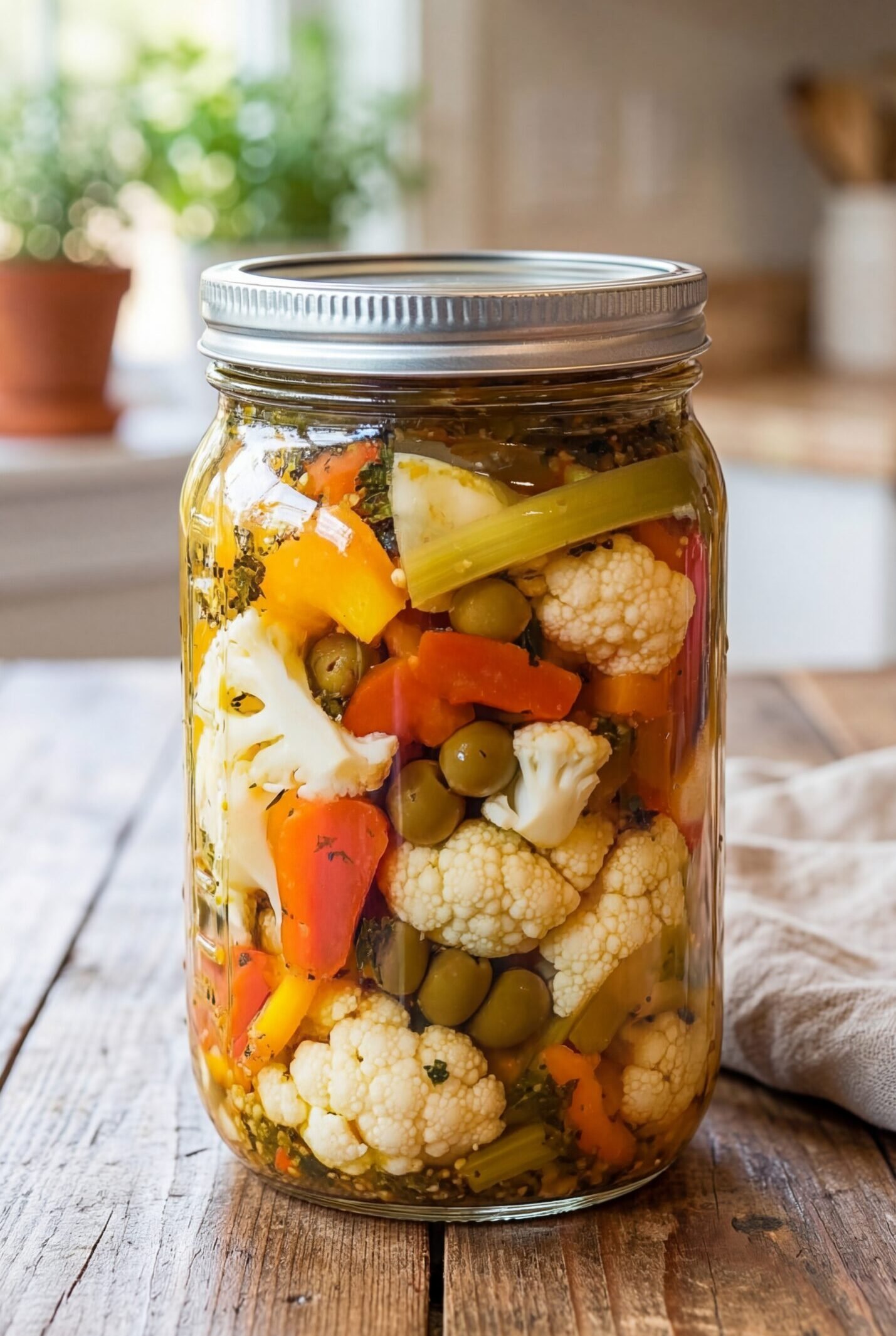
Easy Homemade Pickled Vegetables with Olive Oil
Ingredients:
-
1 cup mixed vegetables (carrots, cucumbers, cauliflower, bell peppers, zucchini, or onions) – you can use any or a combination of these.
-
1/2 cup vinegar (apple cider vinegar or white vinegar)
-
1/4 cup olive oil (extra virgin for richer flavor)
-
1 tablespoon sugar (optional, for sweetness)
-
2-3 garlic cloves (crushed or whole)
-
1 teaspoon salt (sea salt or kosher salt works best)
-
1/2 teaspoon black peppercorns (optional)
-
1/2 teaspoon dried oregano or thyme (optional, for flavor)
-
1-2 bay leaves (optional)
-
1/4 cup water (optional, for diluting the vinegar slightly)
Instructions:
1. Prepare the Vegetables:
-
Wash and peel (if needed) your vegetables.
-
Slice them into your preferred shape—think thin rounds for cucumbers, sticks for carrots, or florets for cauliflower.
-
For harder veggies (like carrots or cauliflower), you can blanch them in boiling water for 1-2 minutes to make them tender before pickling.
2. Make the Pickling Liquid:
-
In a saucepan, combine:
-
1/2 cup vinegar
-
1/4 cup olive oil
-
1/4 cup water (optional, to make the pickle less sour)
-
1 tablespoon sugar (optional, for a sweeter taste)
-
1 teaspoon salt
-
2-3 garlic cloves (crushed or whole, depending on how strong you like garlic)
-
1/2 teaspoon black peppercorns
-
1/2 teaspoon dried oregano or thyme (optional)
-
1-2 bay leaves (optional)
-
-
Heat the mixture over medium heat. Stir occasionally and bring it to a simmer. You don’t need to boil it, just let it heat for 3-5 minutes until the sugar and salt dissolve and the flavors combine.
3. Pack the Vegetables:
-
While your pickling liquid is simmering, place the prepared vegetables in a clean, sterilized jar (or airtight container).
-
Pack the vegetables tightly but not too hard, leaving some space at the top.
4. Pour the Pickling Liquid:
-
Carefully pour the hot pickling liquid over the vegetables, making sure everything is covered.
-
If you run out of liquid, you can make a little more by mixing equal parts vinegar and water, and adding a pinch of salt.
5. Seal and Store:
-
Once the vegetables are submerged in the liquid, seal the jar with a lid.
-
Let it cool to room temperature.
-
After cooling, place the jar in the refrigerator and let it pickle for at least 24 hours (2-3 days is best for maximum flavor). The longer it sits, the more flavorful the pickles will become!
6. Serve:
-
Your pickled vegetables are ready to eat after about a day in the fridge. Enjoy them as a side dish, on sandwiches, or even as a snack!
Q&A Section:
1. Can I use different vegetables for this recipe?
-
Yes! You can mix and match vegetables based on what you like. Carrots, cucumbers, cauliflower, bell peppers, zucchini, and onions are common choices. The key is to use vegetables that will hold up well in vinegar and oil. Softer veggies like tomatoes may not work as well in this recipe.
2. Can I skip the olive oil?
-
If you want a more traditional pickle, you can absolutely skip the olive oil. Just use more vinegar and water instead. Olive oil adds richness and a unique flavor, but it’s optional.
3. How long will these pickled vegetables last?
-
Pickled vegetables should last up to two weeks in the refrigerator if sealed properly. The longer they sit, the more the flavors will develop.
4. What can I do if I don’t have a jar?
-
You can store the pickled vegetables in any clean, airtight container, like a plastic container or even a food storage bag. Just make sure the container is sealed tightly to keep the pickles fresh.
5. Can I use other types of vinegar?
-
Yes! You can use apple cider vinegar for a slightly milder, fruity flavor, or rice vinegar for a sweeter taste. Balsamic vinegar is also an option if you want a deeper flavor, though it will change the color and taste of your pickles.
6. Can I make these pickles spicier?
-
Absolutely! To add spice, try slicing up a chili pepper (jalapeño or red chili) and adding it to the jar with the vegetables before pouring in the pickling liquid. You can also add crushed red pepper flakes to the pickling liquid for a bit of heat.
7. Do I need to boil the vegetables first?
-
It’s not necessary, but you can blanch firmer vegetables (like carrots or cauliflower) in boiling water for a minute or two to soften them slightly. This step is optional but can make the vegetables more tender.
8. Can I use this recipe for fruits like peaches or pears?
-
While this recipe is designed for vegetables, you can experiment with fruits, but the flavor will be different. Fruits like pears or peaches can work well, especially with a little added sugar, but they might need a bit more sweetness and a different balance of vinegar.
Tips for Perfect Pickled Veggies:
-
Sterilize your jars: It’s always a good idea to sterilize the jar before using it. You can do this by placing it in boiling water for a few minutes or running it through a hot dishwasher cycle.
-
Use fresh, high-quality olive oil: The olive oil will flavor the vegetables, so make sure to use a good extra virgin olive oil for the best taste.
-
Adjust flavors to taste: Taste the pickling liquid before pouring it over the vegetables. If you prefer it sweeter, add more sugar. If you like it tangier, add more vinegar.