CLASSIC GREEK SALAD Some recipes don't need much explaining. They just need good ingredients. This Classic Greek Salad is one of those recipes. Whenever I make it, I'm reminded of how much I love food that feels fresh, colorful, and completely uncomplicated. There's no long list of ingredients, no complicated dressing to whisk together, and definitely no need to spend an hour in the kitchen. Just ripe tomatoes, crisp cucumber, crunchy onion, sweet green pepper, salty Kalamata olives, creamy feta, oregano, and a generous drizzle of olive oil. That's it. And somehow, those simple ingredients create a salad that tastes like summer in every bite. I especially love making this on weekends when the weather is warm and everyone wants something fresh alongside grilled chicken, fish, or simply some warm bread. It has become one of those recipes I can throw together almost without thinking. The first time I served it to my family, I expected it to be more of a side dish. Instead, everyone kept going back for another helping. Someone scooped up the tomatoes. Someone grabbed more feta. And, of course, someone discovered that the best part was the flavorful olive oil and tomato juices collecting at the bottom of the bowl. That's when I knew this salad was going to become a regular. Traditional Greek salad, known as horiatiki, is a rustic village-style salad built around tomatoes, cucumber, onion, peppers, olives, feta, oregano, and olive oil. Unlike many international versions, it traditionally contains no lettuce. And honestly? I think that's part of its charm. There is nowhere for mediocre ingredients to hide. When the vegetables are good, the salad is spectacular. ❤️ Why You'll Love This Classic Greek Salad Fresh, crunchy, and colorful Ready in about 15 minutes No cooking required No complicated dressing Naturally vegetarian Perfect for summer lunches and dinners Wonderful alongside grilled meats and seafood Great for Mediterranean-style meals Naturally gluten-free when served without bread Easy to customize Absolutely delicious with warm pita or crusty bread The beauty of horiatiki is its simplicity. The vegetables are usually cut into generous pieces rather than finely chopped, and the feta is traditionally served prominently on top rather than disappearing into the salad. 🛒 Ingredients For the Salad 4 medium ripe tomatoes 1 large cucumber 1 small red onion 1 green bell pepper ¾ cup Kalamata olives 6–8 oz Greek feta cheese ¼ cup extra-virgin olive oil 1 teaspoon dried Greek oregano ½ teaspoon sea salt ¼ teaspoon freshly ground black pepper Optional 1 tablespoon red wine vinegar Freshly squeezed lemon juice A few capers Fresh oregano for garnish Warm pita or crusty bread for serving The traditional ingredient list varies somewhat by region and household. Some versions include red-wine vinegar or lemon, while others rely almost entirely on olive oil, tomato juices, and oregano. 🍅 How to Make Classic Greek Salad 1. Start With the Tomatoes This is the most important part. Choose tomatoes that are ripe, fragrant, and juicy. Cut them into thick wedges or large chunks. Don't finely dice them. You want substantial pieces that stay juicy and give the salad plenty of texture. Place the tomatoes in a wide serving bowl. Sprinkle lightly with salt. Let them sit for about 5–10 minutes. This gives the tomatoes a chance to release some of their juices. And those juices are going to become part of your dressing. 🥒 2. Prepare the Cucumber Wash the cucumber and cut it into thick half-moons. If the skin is particularly tough, peel it partially in stripes. You can also leave the skin completely intact if you prefer. Add the cucumber to the tomatoes. The contrast between juicy tomatoes and cool, crisp cucumber is one of my favorite things about this salad. 🧅 3. Add the Red Onion Thinly slice the red onion. If you find raw onion too strong, place the slices in a bowl of cold water for about 5 minutes, then drain well. This takes away some of the sharp bite while keeping the onion crisp. Scatter the onion over the tomatoes and cucumber. 🫑 4. Add the Green Pepper Remove the seeds and white ribs from the green bell pepper. Cut it into thin rings or strips. Add it to the bowl. The green pepper adds a wonderful crunch and a slightly grassy flavor that balances the sweetness of the tomatoes. 🫒 5. Add the Kalamata Olives Add the Kalamata olives. I prefer whole or roughly halved olives because they feel more rustic and substantial. If you're serving the salad to children or anyone who prefers them pitted, definitely use pitted olives. Traditional versions often use Kalamata olives, although regional variations can include other olives as well. 🧀 6. Add the Feta And now comes one of my favorite parts. Instead of scattering tiny pieces of feta throughout the salad, place a generous block or thick slices right on top. Sprinkle the feta with dried oregano. Then drizzle some of the olive oil directly over it. The creamy feta absorbs a little of the oil and oregano while remaining substantial enough to break apart with your fork as you eat. It's simple, rustic, and beautiful. 🫒 7. Dress the Salad Drizzle the extra-virgin olive oil generously over the vegetables and feta. Add a little more dried oregano. Season with freshly ground black pepper. If you're using red wine vinegar, add a small splash. You don't need a separate dressing. That's one of the things I love about Greek salad. The tomato juices, olive oil, oregano, and feta naturally come together right in the bowl. 🥗 8. Toss Gently Give the vegetables a very gentle toss. Don't aggressively stir the salad. You don't want to crush the tomatoes or break the feta into tiny pieces. I like to toss the vegetables underneath the feta and then leave the feta sitting proudly on top. That way, every person gets a little bit of everything. 🌿 9. Finish and Serve Add another small sprinkle of oregano. Taste and adjust the salt if necessary. Remember that both feta and Kalamata olives can be quite salty, so go easy. Serve immediately or within a short time. And if you're serving bread alongside it, don't throw away the juices at the bottom of the bowl. That's the part you'll want to mop up. ⭐ My Best Tips for the Best Greek Salad Use Room-Temperature Tomatoes This makes a bigger difference than you might expect. Cold tomatoes often don't have the same aroma or sweetness as ripe tomatoes served closer to room temperature. Buy the Best Olive Oil You Can There isn't a complicated dressing here to hide behind. The olive oil is one of the main flavors. Use an extra-virgin olive oil that you genuinely enjoy eating. Don't Chop Everything Too Small Greek salad is rustic. Large, generous pieces give you better texture and make every ingredient easier to taste. Don't Overdress It You want the vegetables coated with olive oil—not swimming in dressing. Don't Over-Salt Feta and olives already bring plenty of saltiness. Season lightly first, then taste. Use Real Feta A good block of feta in brine has a creamy, tangy flavor that's hard to replace. Don't Make It Hours Ahead The longer the tomatoes sit, the more liquid they release. For the freshest texture, assemble it relatively close to serving time. 🧀 Should I Crumble the Feta? You can, but I prefer keeping it in larger pieces. Traditional horiatiki commonly features a substantial slab or thick pieces of feta on top rather than having the cheese completely mixed throughout the vegetables. That said, this is your salad. If you prefer crumbled feta in every bite, go for it. Nobody at my table is going to complain. 🥬 Does Classic Greek Salad Have Lettuce? Traditionally, no. This is one of the biggest differences between traditional horiatiki and many restaurant-style Greek salads outside Greece. Traditional versions are built around chunky vegetables, olives, feta, oregano, and olive oil rather than a base of lettuce. You can certainly add lettuce if you like. It just turns it into your own variation rather than the classic village-style salad. 🍋 Should I Add Lemon Juice? You can. A small squeeze of lemon gives the salad a bright, fresh finish. However, you don't need it. Tomato juice and olive oil already create a delicious natural dressing. Some traditional versions use no acid at all, while others use lemon or red-wine vinegar. 🫒 Can I Use Different Olives? Absolutely. Kalamata olives are the classic choice, but you can use another good Greek olive if that's what you have. Green olives can also be delicious if you prefer a milder, more buttery flavor. 🌶️ Easy Variations Greek Salad With Capers Add a tablespoon of drained capers for extra briny flavor. Capers and caper leaves are used in some Greek island variations. Greek Salad With Avocado Add diced avocado just before serving. This isn't traditional, but it makes the salad extra creamy and filling. Greek Salad With Chickpeas Add a cup of drained chickpeas for a heartier vegetarian lunch. Greek Chicken Salad Top the salad with sliced grilled chicken. It's an easy way to turn a side dish into a complete meal. Greek Salad With Grilled Shrimp Add grilled shrimp seasoned with garlic, oregano, lemon, salt, and pepper. The combination is fantastic. Creamy Greek Salad If you want a more modern restaurant-style version, serve the salad with a little tzatziki on the side. 🍗 What to Serve With Greek Salad This salad goes with almost everything. Try serving it alongside: Grilled chicken Chicken souvlaki Grilled pork chops Lamb kebabs Grilled shrimp Baked fish Roasted chicken Grilled steak Falafel Hummus Tzatziki Warm pita Crusty bread It also makes a beautiful addition to a Mediterranean dinner spread. Put the salad in the center of the table with grilled meat, warm bread, olives, dips, and roasted vegetables. That's the kind of dinner where nobody feels rushed. 🥖 Don't Forget the Bread If you're serving traditional Greek salad, warm bread or pita is one of my favorite additions. Not because the salad needs it. Because there's always that wonderful mixture of olive oil and tomato juices left at the bottom of the bowl. And letting that go to waste feels almost criminal. Take a piece of warm bread. Dip. Take a bite. Repeat. 🧊 How to Store Greek Salad Greek salad is best fresh, but leftovers can be refrigerated in an airtight container for about 1 day for the best texture. The tomatoes and cucumber will release more liquid as they sit. If you know you'll have leftovers, consider keeping the vegetables and dressing separate until you're ready to eat. 🥗 Can I Make Greek Salad Ahead? Yes, with a little planning. You can wash and cut the vegetables several hours ahead and refrigerate them separately. Keep the feta and olives ready to go. Then assemble everything shortly before serving. This gives you the convenience of advance preparation without sacrificing the crisp texture of the vegetables. ❓ Frequently Asked Questions What is a traditional Greek salad called? It's commonly called horiatiki, which means “village” or “country-style” salad. Does authentic Greek salad contain lettuce? Traditional horiatiki does not contain lettuce. It focuses on tomatoes, cucumber, onion, green pepper, olives, feta, oregano, and olive oil. Can I use cherry tomatoes? Absolutely. They aren't the classic choice, but they work very well when they're ripe and sweet. Halve larger cherry tomatoes or leave small ones whole. Can I use English cucumber? Yes. It works beautifully, especially when you want a crisp cucumber with a thinner skin. Can I use crumbled feta? Yes. A block of feta is more traditional, but crumbled feta is perfectly delicious. Can I leave out the green pepper? Of course. The salad will still be delicious. Can I add lettuce? Yes, if you like. It will make the salad more similar to the Greek salads commonly served internationally, though traditional horiatiki doesn't use lettuce. Can I add chicken? Definitely. Grilled chicken turns this into a satisfying complete meal. Is Greek salad keto-friendly? It can fit into a keto-style diet because its core ingredients are relatively low in carbohydrates, but tomatoes, onions, and other vegetables still contribute carbohydrates. Portion size and individual ingredient choices matter. Is Greek salad healthy? It's made primarily from vegetables, olives, feta, and extra-virgin olive oil, making it a nutrient-dense and flavorful salad option. As with any recipe, overall nutrition depends on portions and ingredients. How long does Greek salad last? It's best enjoyed fresh. Once dressed, the vegetables gradually become softer and release more liquid, so leftovers are best eaten within about a day. 🍽️ Recipe at a Glance Prep Time: 15 minutes Cook Time: None Total Time: 15 minutes Servings: 4 Category: Salad / Side Dish Cuisine: Greek / Mediterranean Method: No-cook Difficulty: Easy ❤️ The Salad I Never Get Tired Of Some recipes come and go. This isn't one of them. Classic Greek Salad is the kind of recipe I can make over and over again because it never feels boring. Maybe it's the juicy tomatoes. Maybe it's the crisp cucumber. Maybe it's that salty feta and those briny Kalamata olives. Or maybe it's simply the way good olive oil ties everything together. I love putting a big bowl of this on the table when family is around. It feels generous without being complicated, and somehow everyone finds something they love in it. On a warm weekend, I'll serve it alongside grilled chicken or fish. On a busy afternoon, I'll pile it into a bowl with some warm pita and call it lunch. And when I'm making a bigger Mediterranean-style dinner, this is almost always the salad I reach for. It doesn't need fancy tricks. It doesn't need an elaborate dressing. It just needs good tomatoes, good feta, good olive oil, and a little time to enjoy it. And honestly, isn't that what good food is supposed to be? Simple ingredients. Big flavor. A table full of people going back for another bite.

CLASSIC GREEK SALAD

Some recipes don’t need much explaining.

They just need good ingredients.

This Classic Greek Salad is one of those recipes.

Whenever I make it, I’m reminded of how much I love food that feels fresh, colorful, and completely uncomplicated. There’s no long list of ingredients, no complicated dressing to whisk together, and definitely no need to spend an hour in the kitchen.

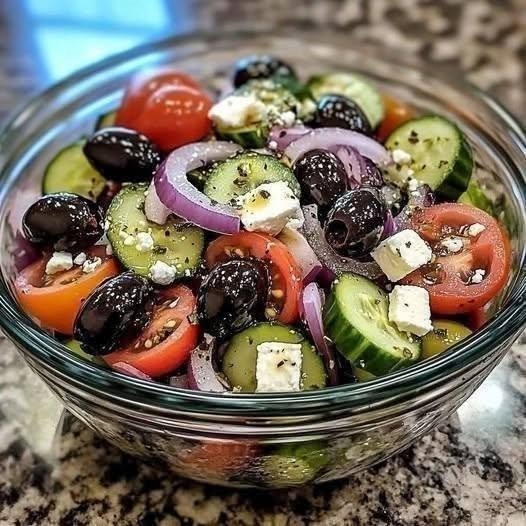
Just ripe tomatoes, crisp cucumber, crunchy onion, sweet green pepper, salty Kalamata olives, creamy feta, oregano, and a generous drizzle of olive oil.

That’s it.

And somehow, those simple ingredients create a salad that tastes like summer in every bite.

I especially love making this on weekends when the weather is warm and everyone wants something fresh alongside grilled chicken, fish, or simply some warm bread. It has become one of those recipes I can throw together almost without thinking.

The first time I served it to my family, I expected it to be more of a side dish.

Instead, everyone kept going back for another helping.

Someone scooped up the tomatoes.

Someone grabbed more feta.

And, of course, someone discovered that the best part was the flavorful olive oil and tomato juices collecting at the bottom of the bowl.

That’s when I knew this salad was going to become a regular.

Traditional Greek salad, known as horiatiki, is a rustic village-style salad built around tomatoes, cucumber, onion, peppers, olives, feta, oregano, and olive oil. Unlike many international versions, it traditionally contains no lettuce.

And honestly?

I think that’s part of its charm.

There is nowhere for mediocre ingredients to hide.

When the vegetables are good, the salad is spectacular.


❤️ Why You’ll Love This Classic Greek Salad

  • Fresh, crunchy, and colorful
  • Ready in about 15 minutes
  • No cooking required
  • No complicated dressing
  • Naturally vegetarian
  • Perfect for summer lunches and dinners
  • Wonderful alongside grilled meats and seafood
  • Great for Mediterranean-style meals
  • Naturally gluten-free when served without bread
  • Easy to customize
  • Absolutely delicious with warm pita or crusty bread

The beauty of horiatiki is its simplicity. The vegetables are usually cut into generous pieces rather than finely chopped, and the feta is traditionally served prominently on top rather than disappearing into the salad.


🛒 Ingredients

For the Salad

  • 4 medium ripe tomatoes
  • 1 large cucumber
  • 1 small red onion
  • 1 green bell pepper
  • ¾ cup Kalamata olives
  • 6–8 oz Greek feta cheese
  • ¼ cup extra-virgin olive oil
  • 1 teaspoon dried Greek oregano
  • ½ teaspoon sea salt
  • ¼ teaspoon freshly ground black pepper

Optional

  • 1 tablespoon red wine vinegar
  • Freshly squeezed lemon juice
  • A few capers
  • Fresh oregano for garnish
  • Warm pita or crusty bread for serving

The traditional ingredient list varies somewhat by region and household. Some versions include red-wine vinegar or lemon, while others rely almost entirely on olive oil, tomato juices, and oregano.


🍅 How to Make Classic Greek Salad

1. Start With the Tomatoes

This is the most important part.

Choose tomatoes that are ripe, fragrant, and juicy.

Cut them into thick wedges or large chunks.

Don’t finely dice them.

You want substantial pieces that stay juicy and give the salad plenty of texture.

Place the tomatoes in a wide serving bowl.

Sprinkle lightly with salt.

Let them sit for about 5–10 minutes.

This gives the tomatoes a chance to release some of their juices.

And those juices are going to become part of your dressing.


🥒 2. Prepare the Cucumber

Wash the cucumber and cut it into thick half-moons.

If the skin is particularly tough, peel it partially in stripes.

You can also leave the skin completely intact if you prefer.

Add the cucumber to the tomatoes.

The contrast between juicy tomatoes and cool, crisp cucumber is one of my favorite things about this salad.


🧅 3. Add the Red Onion

Thinly slice the red onion.

If you find raw onion too strong, place the slices in a bowl of cold water for about 5 minutes, then drain well.

This takes away some of the sharp bite while keeping the onion crisp.

Scatter the onion over the tomatoes and cucumber.


🫑 4. Add the Green Pepper

Remove the seeds and white ribs from the green bell pepper.

Cut it into thin rings or strips.

Add it to the bowl.

The green pepper adds a wonderful crunch and a slightly grassy flavor that balances the sweetness of the tomatoes.


🫒 5. Add the Kalamata Olives

Add the Kalamata olives.

I prefer whole or roughly halved olives because they feel more rustic and substantial.

If you’re serving the salad to children or anyone who prefers them pitted, definitely use pitted olives.

Traditional versions often use Kalamata olives, although regional variations can include other olives as well.


🧀 6. Add the Feta

And now comes one of my favorite parts.

Instead of scattering tiny pieces of feta throughout the salad, place a generous block or thick slices right on top.

Sprinkle the feta with dried oregano.

Then drizzle some of the olive oil directly over it.

The creamy feta absorbs a little of the oil and oregano while remaining substantial enough to break apart with your fork as you eat.

It’s simple, rustic, and beautiful.


🫒 7. Dress the Salad

Drizzle the extra-virgin olive oil generously over the vegetables and feta.

Add a little more dried oregano.

Season with freshly ground black pepper.

If you’re using red wine vinegar, add a small splash.

You don’t need a separate dressing.

That’s one of the things I love about Greek salad.

The tomato juices, olive oil, oregano, and feta naturally come together right in the bowl.


🥗 8. Toss Gently

Give the vegetables a very gentle toss.

Don’t aggressively stir the salad.

You don’t want to crush the tomatoes or break the feta into tiny pieces.

I like to toss the vegetables underneath the feta and then leave the feta sitting proudly on top.

That way, every person gets a little bit of everything.


🌿 9. Finish and Serve

Add another small sprinkle of oregano.

Taste and adjust the salt if necessary.

Remember that both feta and Kalamata olives can be quite salty, so go easy.

Serve immediately or within a short time.

And if you’re serving bread alongside it, don’t throw away the juices at the bottom of the bowl.

That’s the part you’ll want to mop up.


⭐ My Best Tips for the Best Greek Salad

Use Room-Temperature Tomatoes

This makes a bigger difference than you might expect.

Cold tomatoes often don’t have the same aroma or sweetness as ripe tomatoes served closer to room temperature.

Buy the Best Olive Oil You Can

There isn’t a complicated dressing here to hide behind.

The olive oil is one of the main flavors.

Use an extra-virgin olive oil that you genuinely enjoy eating.

Don’t Chop Everything Too Small

Greek salad is rustic.

Large, generous pieces give you better texture and make every ingredient easier to taste.

Don’t Overdress It

You want the vegetables coated with olive oil—not swimming in dressing.

Don’t Over-Salt

Feta and olives already bring plenty of saltiness.

Season lightly first, then taste.

Use Real Feta

A good block of feta in brine has a creamy, tangy flavor that’s hard to replace.

Don’t Make It Hours Ahead

The longer the tomatoes sit, the more liquid they release.

For the freshest texture, assemble it relatively close to serving time.


🧀 Should I Crumble the Feta?

You can, but I prefer keeping it in larger pieces.

Traditional horiatiki commonly features a substantial slab or thick pieces of feta on top rather than having the cheese completely mixed throughout the vegetables.

That said, this is your salad.

If you prefer crumbled feta in every bite, go for it.

Nobody at my table is going to complain.


🥬 Does Classic Greek Salad Have Lettuce?

Traditionally, no.

This is one of the biggest differences between traditional horiatiki and many restaurant-style Greek salads outside Greece.

Traditional versions are built around chunky vegetables, olives, feta, oregano, and olive oil rather than a base of lettuce.

You can certainly add lettuce if you like.

It just turns it into your own variation rather than the classic village-style salad.


🍋 Should I Add Lemon Juice?

You can.

A small squeeze of lemon gives the salad a bright, fresh finish.

However, you don’t need it.

Tomato juice and olive oil already create a delicious natural dressing.

Some traditional versions use no acid at all, while others use lemon or red-wine vinegar.


🫒 Can I Use Different Olives?

Absolutely.

Kalamata olives are the classic choice, but you can use another good Greek olive if that’s what you have.

Green olives can also be delicious if you prefer a milder, more buttery flavor.


🌶️ Easy Variations

Greek Salad With Capers

Add a tablespoon of drained capers for extra briny flavor.

Capers and caper leaves are used in some Greek island variations.

Greek Salad With Avocado

Add diced avocado just before serving.

This isn’t traditional, but it makes the salad extra creamy and filling.

Greek Salad With Chickpeas

Add a cup of drained chickpeas for a heartier vegetarian lunch.

Greek Chicken Salad

Top the salad with sliced grilled chicken.

It’s an easy way to turn a side dish into a complete meal.

Greek Salad With Grilled Shrimp

Add grilled shrimp seasoned with garlic, oregano, lemon, salt, and pepper.

The combination is fantastic.

Creamy Greek Salad

If you want a more modern restaurant-style version, serve the salad with a little tzatziki on the side.


🍗 What to Serve With Greek Salad

This salad goes with almost everything.

Try serving it alongside:

  • Grilled chicken
  • Chicken souvlaki
  • Grilled pork chops
  • Lamb kebabs
  • Grilled shrimp
  • Baked fish
  • Roasted chicken
  • Grilled steak
  • Falafel
  • Hummus
  • Tzatziki
  • Warm pita
  • Crusty bread

It also makes a beautiful addition to a Mediterranean dinner spread.

Put the salad in the center of the table with grilled meat, warm bread, olives, dips, and roasted vegetables.

That’s the kind of dinner where nobody feels rushed.


🥖 Don’t Forget the Bread

If you’re serving traditional Greek salad, warm bread or pita is one of my favorite additions.

Not because the salad needs it.

Because there’s always that wonderful mixture of olive oil and tomato juices left at the bottom of the bowl.

And letting that go to waste feels almost criminal.

Take a piece of warm bread.

Dip.

Take a bite.

Repeat.


🧊 How to Store Greek Salad

Greek salad is best fresh, but leftovers can be refrigerated in an airtight container for about 1 day for the best texture.

The tomatoes and cucumber will release more liquid as they sit.

If you know you’ll have leftovers, consider keeping the vegetables and dressing separate until you’re ready to eat.


🥗 Can I Make Greek Salad Ahead?

Yes, with a little planning.

You can wash and cut the vegetables several hours ahead and refrigerate them separately.

Keep the feta and olives ready to go.

Then assemble everything shortly before serving.

This gives you the convenience of advance preparation without sacrificing the crisp texture of the vegetables.


❓ Frequently Asked Questions

What is a traditional Greek salad called?

It’s commonly called horiatiki, which means “village” or “country-style” salad.

Does authentic Greek salad contain lettuce?

Traditional horiatiki does not contain lettuce. It focuses on tomatoes, cucumber, onion, green pepper, olives, feta, oregano, and olive oil.

Can I use cherry tomatoes?

Absolutely.

They aren’t the classic choice, but they work very well when they’re ripe and sweet.

Halve larger cherry tomatoes or leave small ones whole.

Can I use English cucumber?

Yes.

It works beautifully, especially when you want a crisp cucumber with a thinner skin.

Can I use crumbled feta?

Yes.

A block of feta is more traditional, but crumbled feta is perfectly delicious.

Can I leave out the green pepper?

Of course.

The salad will still be delicious.

Can I add lettuce?

Yes, if you like.

It will make the salad more similar to the Greek salads commonly served internationally, though traditional horiatiki doesn’t use lettuce.

Can I add chicken?

Definitely.

Grilled chicken turns this into a satisfying complete meal.

Is Greek salad keto-friendly?

It can fit into a keto-style diet because its core ingredients are relatively low in carbohydrates, but tomatoes, onions, and other vegetables still contribute carbohydrates. Portion size and individual ingredient choices matter.

Is Greek salad healthy?

It’s made primarily from vegetables, olives, feta, and extra-virgin olive oil, making it a nutrient-dense and flavorful salad option. As with any recipe, overall nutrition depends on portions and ingredients.

How long does Greek salad last?

It’s best enjoyed fresh. Once dressed, the vegetables gradually become softer and release more liquid, so leftovers are best eaten within about a day.


🍽️ Recipe at a Glance

Prep Time: 15 minutes
Cook Time: None
Total Time: 15 minutes
Servings: 4
Category: Salad / Side Dish
Cuisine: Greek / Mediterranean
Method: No-cook
Difficulty: Easy


❤️ The Salad I Never Get Tired Of

Some recipes come and go.

This isn’t one of them.

Classic Greek Salad is the kind of recipe I can make over and over again because it never feels boring.

Maybe it’s the juicy tomatoes.

Maybe it’s the crisp cucumber.

Maybe it’s that salty feta and those briny Kalamata olives.

Or maybe it’s simply the way good olive oil ties everything together.

I love putting a big bowl of this on the table when family is around. It feels generous without being complicated, and somehow everyone finds something they love in it.

On a warm weekend, I’ll serve it alongside grilled chicken or fish.

On a busy afternoon, I’ll pile it into a bowl with some warm pita and call it lunch.

And when I’m making a bigger Mediterranean-style dinner, this is almost always the salad I reach for.

It doesn’t need fancy tricks.

It doesn’t need an elaborate dressing.

It just needs good tomatoes, good feta, good olive oil, and a little time to enjoy it.

And honestly, isn’t that what good food is supposed to be?

Simple ingredients. Big flavor. A table full of people going back for another bite.

By Admin

Leave a Reply

Your email address will not be published. Required fields are marked *