
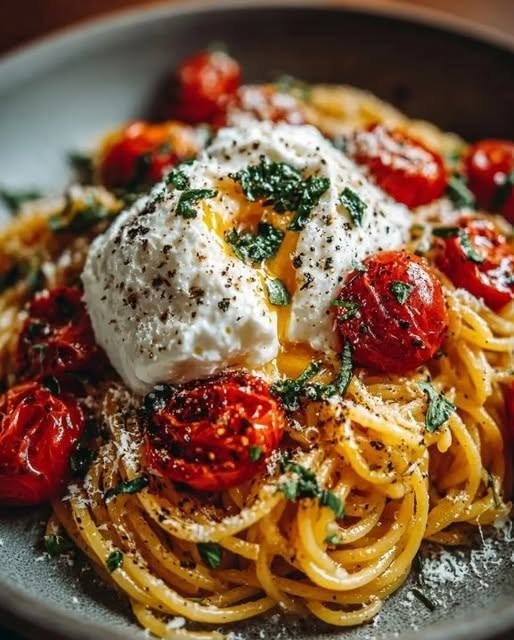
Creamy Burrata Pasta with Roasted Cherry Tomatoes & Basil Oil
This Creamy Burrata Pasta with Roasted Cherry Tomatoes and Basil Oil is a delicious Italian-inspired dinner. Sweet cherry tomatoes are roasted with garlic and olive oil until soft and caramelized, then tossed with perfectly cooked pasta. Creamy burrata cheese melts over the warm pasta, while homemade basil oil adds a fresh, aromatic finish. It is an elegant yet easy meal for weeknight dinners or special occasions.
Recipe Information
– Prep Time: 15 minutes
– Cook Time: 30 minutes
– Total Time: 45 minutes
– Servings: 4
– Course: Main Course
– Cuisine: Italian
– Cooking Temperature: 400°F (200°C)
Ingredients
For the Pasta
– 12 ounces (340 g) rigatoni, linguine, or spaghetti
– 2 pints cherry tomatoes
– 4 tablespoons olive oil, divided
– 4 garlic cloves, minced
– ½ teaspoon salt
– ½ teaspoon black pepper
– ¼ teaspoon red pepper flakes (optional)
– ¼ cup grated Parmesan cheese
– ½ cup reserved pasta water
For the Basil Oil
– 1 cup fresh basil leaves
– ¼ cup extra virgin olive oil
– 1 small garlic clove
– 1 teaspoon fresh lemon juice
– ¼ teaspoon salt
For Topping
– 8 ounces (225 g) fresh burrata cheese
– Fresh basil leaves
– Extra Parmesan cheese
– Freshly cracked black pepper
Instructions
1. Preheat the Oven: Preheat your oven to 400°F (200°C). Line a large baking sheet with parchment paper to make cleanup easier.
2. Prepare the Tomatoes: Wash and dry the cherry tomatoes. Cut them in half and place them in a large mixing bowl.
3. Season the Tomatoes: Add 2 tablespoons of olive oil, minced garlic, salt, black pepper, and red pepper flakes. Toss everything together until the tomatoes are evenly coated.
4. Roast the Tomatoes: Spread the seasoned tomatoes in a single layer on the prepared baking sheet. Roast for 20–25 minutes, until they become soft, juicy, and slightly caramelized around the edges.
5. Boil the Pasta: While the tomatoes roast, bring a large pot of salted water to a boil. Add the pasta and cook according to the package instructions until al dente, usually 9–12 minutes.
6. Reserve Pasta Water: Before draining the pasta, carefully reserve ½ cup of the starchy cooking water. Drain the pasta and set it aside.
7. Prepare the Basil Oil: Add the fresh basil leaves, extra virgin olive oil, garlic clove, lemon juice, and salt to a small blender or food processor.
8. Blend Until Smooth: Blend for approximately 30–45 seconds until the mixture becomes a smooth, vibrant green oil. Scrape down the sides if necessary. Set aside.
9. Combine the Pasta and Tomatoes: Transfer the cooked pasta to a large skillet or mixing bowl. Add the roasted cherry tomatoes along with all their flavorful juices.
10. Make It Creamy: Add the remaining 2 tablespoons of olive oil, grated Parmesan cheese, and a few tablespoons of reserved pasta water. Toss gently until the sauce coats the pasta.
11. Adjust the Sauce: Add more reserved pasta water, one tablespoon at a time, if the pasta looks dry. The sauce should be glossy and lightly creamy.
12. Add the Burrata: Transfer the pasta to a serving dish. Tear the burrata into large pieces and arrange them over the warm pasta.
13. Finish with Basil Oil: Drizzle the homemade basil oil generously over the burrata and roasted tomatoes.
14. Garnish and Serve: Finish with fresh basil leaves, extra Parmesan cheese, and freshly cracked black pepper. Serve immediately while the pasta is warm and the burrata is soft and creamy.
Questions & Answers
Q1: What is Creamy Burrata Pasta?
It is an Italian-inspired pasta dish made with roasted cherry tomatoes, tender pasta, creamy burrata cheese, and fresh basil oil.
Q2: What type of pasta works best?
Rigatoni, penne, linguine, spaghetti, and bucatini all work beautifully. Rigatoni is especially good because its ridges hold the sauce.
Q3: What is burrata cheese?
Burrata is a fresh Italian cheese made with an outer mozzarella shell and a soft, creamy center filled with stracciatella and cream.
Q4: Can I use mozzarella instead of burrata?
Yes. Fresh mozzarella is a good substitute, although it will not provide the same rich and creamy center.
Q5: How long should I roast the cherry tomatoes?
Roast them at 400°F (200°C) for 20–25 minutes, until they soften, release their juices, and develop slightly caramelized edges.
Q6: Can I use grape tomatoes?
Yes. Grape tomatoes work just as well. Cut them in half before roasting for better flavor and texture.
Q7: Can I prepare the basil oil ahead of time?
Yes. Prepare the basil oil up to 2 days in advance and store it in an airtight container in the refrigerator.
Q8: Why should I reserve pasta water?
Pasta water contains starch that helps the olive oil, tomato juices, and Parmesan combine into a smooth sauce.
Q9: Can I make this recipe without Parmesan cheese?
Yes. You can leave out Parmesan or replace it with a suitable vegetarian hard cheese.
Q10: Can I make the pasta spicy?
Absolutely. Add extra red pepper flakes or a little chili oil to give the dish more heat.
Q11: Can I add heavy cream?
Yes. Add ¼ cup of heavy cream to the tomato mixture if you prefer a richer, more traditional creamy sauce.
Q12: Can I add chicken to this pasta?
Yes. Grilled or pan-seared chicken breast makes an excellent protein addition.
Q13: Can I add shrimp?
Yes. Cook peeled shrimp separately for approximately 2–3 minutes per side, depending on size, and add them before serving.
Q14: How do I prevent the burrata from becoming watery?
Drain the burrata before using it and add it just before serving rather than cooking it directly in the sauce.
Q15: Can I make this recipe ahead of time?
You can roast the tomatoes and prepare the basil oil ahead of time. For the best texture, cook the pasta and add the burrata just before serving.
Q16: How should I store leftovers?
Place leftover pasta in an airtight container and refrigerate for up to 2 days. Store any extra basil oil separately.
Q17: How do I reheat leftover burrata pasta?
Reheat the pasta gently in a skillet over low heat with 1–2 tablespoons of water. Add fresh burrata after reheating.
Q18: Can I freeze this pasta?
Freezing is not recommended because burrata and fresh basil oil can lose their creamy texture and fresh flavor after thawing.
Q19: Is this recipe vegetarian?
Yes, when prepared with vegetarian Parmesan or another suitable vegetarian hard cheese.
Q20: What can I serve with burrata pasta?
Serve it with garlic bread, a fresh green salad, roasted vegetables, or grilled chicken.
Q21: Can I use dried basil instead of fresh basil?
Fresh basil is recommended for the basil oil because it provides the best color and aroma. Dried basil can be used in the tomato seasoning but will not produce the same fresh flavor.
Q22: How do I make the basil oil brighter green?
Use fresh, vibrant basil leaves and blend them briefly with good-quality olive oil. Avoid overheating the mixture during blending.
Q23: Why is my pasta sauce too thick?
The sauce may need more liquid. Add reserved pasta water gradually until it reaches a smooth, glossy consistency.
Q24: When should I add the burrata cheese?
Always add burrata at the end, just before serving. The warmth of the pasta softens its creamy center without overcooking the cheese.
Q25: Is this recipe suitable for a dinner party?
Yes. Its colorful roasted tomatoes, creamy burrata, and fragrant basil oil make it an attractive and delicious dish for entertaining guests.