
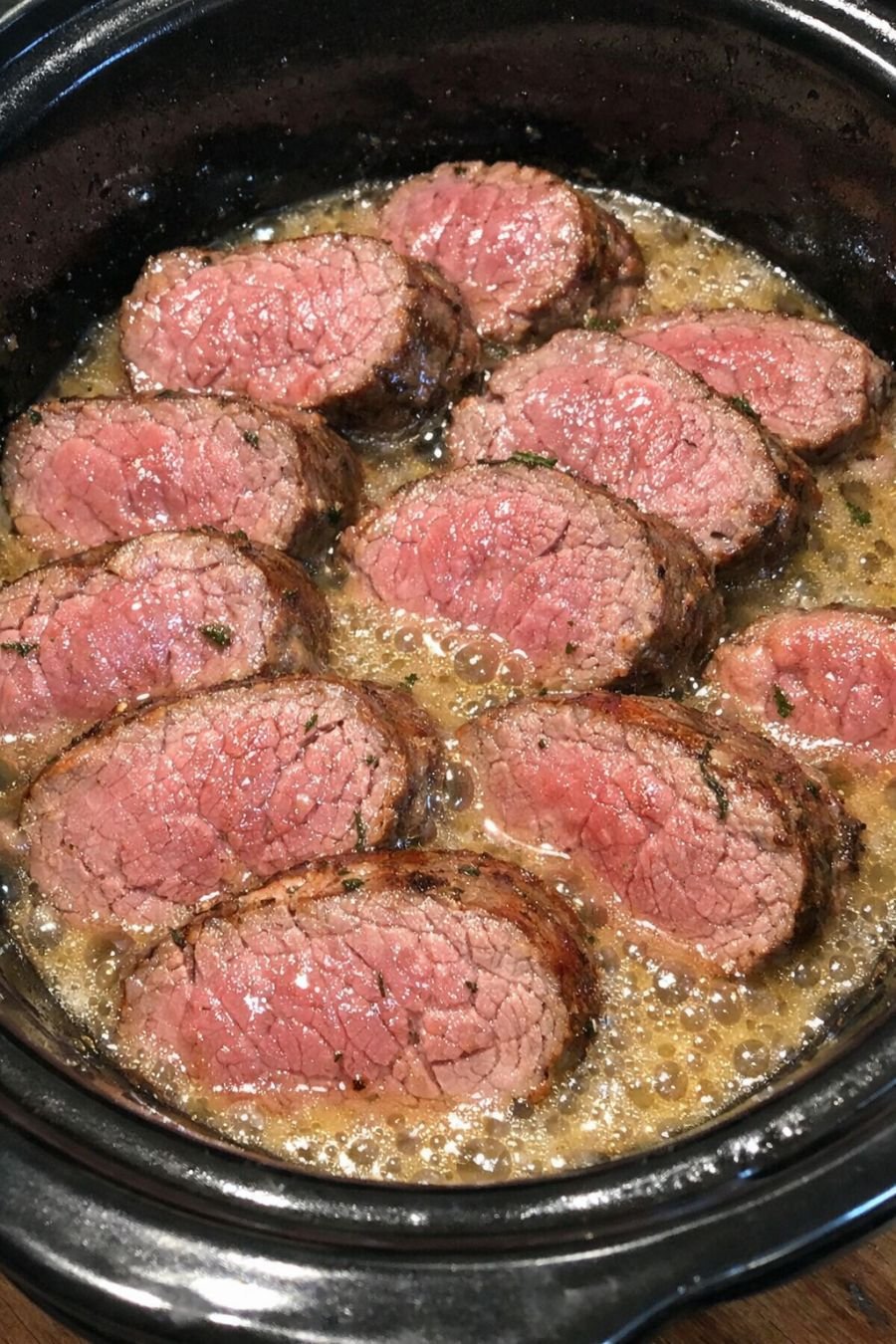
Slow Cooker 3-Ingredient Champagne Beef Tenderloin
Slow Cooker 3-Ingredient Champagne Beef Tenderloin is an elegant but surprisingly simple dinner made with tender beef, champagne, and a savory seasoning blend. The slow cooker gently cooks the beef until tender while the champagne creates a flavorful, aromatic cooking liquid.
Recipe Details
Preparation Time: 10 minutes
Cooking Time: 3–4 hours on LOW or 1½–2½ hours on HIGH
Total Time: Approximately 3 hours 10 minutes to 4 hours 10 minutes
Servings: 4–6
Cooking Method: Slow Cooker
Difficulty Level: Easy
Ingredients
2 pounds beef tenderloin roast
1 cup dry champagne or sparkling wine
1 packet dry onion soup and dip mix
Instructions
Step 1: Prepare the Beef
Time: 3 minutes
Pat the beef tenderloin dry with paper towels.
If the tenderloin is very large, cut it into 2 pieces so it fits comfortably in the slow cooker.
Step 2: Add the Beef to the Slow Cooker
Time: 1 minute
Place the beef tenderloin in the center of the slow cooker.
Sprinkle the dry onion soup and dip mix evenly over the top and sides of the beef.
Step 3: Add the Champagne
Time: 1 minute
Pour the champagne slowly around the beef.
Try not to wash all of the seasoning off the surface of the meat.
Step 4: Slow Cook
Time: 3–4 hours on LOW
Cover the slow cooker with the lid.
Cook on LOW for approximately 3–4 hours.
Because beef tenderloin is a naturally tender and relatively lean cut, avoid cooking it for an excessively long period. Begin checking the internal temperature around the 2½–3-hour mark.
For a more well-done result, continue cooking until the desired temperature is reached.
Step 5: Check the Internal Temperature
Time: 1 minute
Insert an instant-read thermometer into the thickest part of the beef.
For whole beef tenderloin, the USDA recommends cooking to 145°F (63°C) followed by at least a 3-minute rest.
The exact cooking time will depend on the size and shape of the tenderloin and the temperature of your slow cooker.
Step 6: Rest the Beef
Time: 5–10 minutes
Transfer the cooked tenderloin to a cutting board and loosely cover it with foil.
Allow it to rest for 5–10 minutes before slicing.
Resting allows the juices to redistribute throughout the meat.
Step 7: Slice and Serve
Time: 2 minutes
Slice the tenderloin across the grain into thick pieces.
Spoon some of the champagne-onion cooking liquid over the slices before serving.
Optional Browning Step
For a more attractive browned exterior, sear the beef before placing it in the slow cooker.
Additional Time: 6–8 minutes
Heat 1 tablespoon of oil in a large skillet over medium-high heat.
Sear the tenderloin for approximately 1–2 minutes per side, turning until browned on several sides.
Transfer the browned beef to the slow cooker and continue with the recipe.
This step is optional and does not change the three main ingredients.
Serving Suggestions
Serve the beef tenderloin with:
Garlic mashed potatoes
Roasted asparagus
Green beans
Creamy cauliflower mash
Roasted carrots
Steamed broccoli
Mixed green salad
Crusty bread
Storage Instructions
Allow leftover beef to cool and refrigerate it in an airtight container within 2 hours.
Store in the refrigerator for 3–4 days.
For longer storage, freeze sliced beef in a freezer-safe container for up to 2–3 months for best quality.
Reheating Instructions
For the best texture, reheat the beef gently.
Place slices in a covered skillet with a few spoonfuls of the cooking liquid. Heat over low heat until warmed through.
Avoid prolonged high-heat cooking because beef tenderloin can become dry and tough.
Frequently Asked Questions
Q: How long does Champagne Beef Tenderloin take in the slow cooker?
A: It generally takes approximately 3–4 hours on LOW, but the exact time depends on the size and thickness of the tenderloin. Start checking the internal temperature around 2½–3 hours.
Q: What temperature should beef tenderloin reach?
A: For food safety, whole beef tenderloin should reach 145°F (63°C) and rest for at least 3 minutes.
Q: Can I use sparkling wine instead of champagne?
A: Yes. A dry sparkling wine can be used instead of champagne. Choose a dry variety rather than a sweet sparkling wine so the finished dish does not become overly sweet.
Q: Can I use a different cut of beef?
A: Yes, but cooking times and texture will change. Sirloin roast or another suitable beef roast can be used, although tenderloin gives the most tender result.
Q: Do I have to sear the beef first?
A: No. The beef can go directly into the slow cooker. Searing is optional and adds extra browning and flavor.
Q: Can I make this recipe without onion soup mix?
A: You can replace it with a homemade mixture of onion powder, garlic powder, dried herbs, salt, and black pepper, but this will technically change the recipe from three ingredients.
Q: Can I use a sweet champagne?
A: It is better to use a dry champagne or dry sparkling wine. Sweet varieties can make the sauce noticeably sweeter.
Q: Why is my beef tenderloin tough?
A: Beef tenderloin is naturally tender, so overcooking can make it dry or firm. Use a meat thermometer and avoid cooking it far beyond your desired internal temperature.
Q: Can I prepare the beef ahead of time?
A: Yes. You can season the tenderloin and refrigerate it until you are ready to cook. Keep raw beef refrigerated and cook it within a safe timeframe.
Q: Can I freeze the leftovers?
A: Yes. Cool the beef completely, slice it, and store it in an airtight freezer-safe container with some of the cooking liquid. Freeze for up to 2–3 months for best quality.
Q: Can I thicken the cooking liquid into a sauce?
A: Yes. Strain the cooking liquid and transfer it to a saucepan. Simmer until reduced to your preferred consistency. For a thicker sauce, a small amount of cornstarch slurry can also be added, although this adds another ingredient.
Estimated Nutrition Information
Per serving, based on 6 servings:
Calories: Approximately 350–420
Protein: Approximately 42–48 g
Fat: Approximately 15–20 g
Carbohydrates: Approximately 3–6 g
Sugar: Approximately 1–2 g