
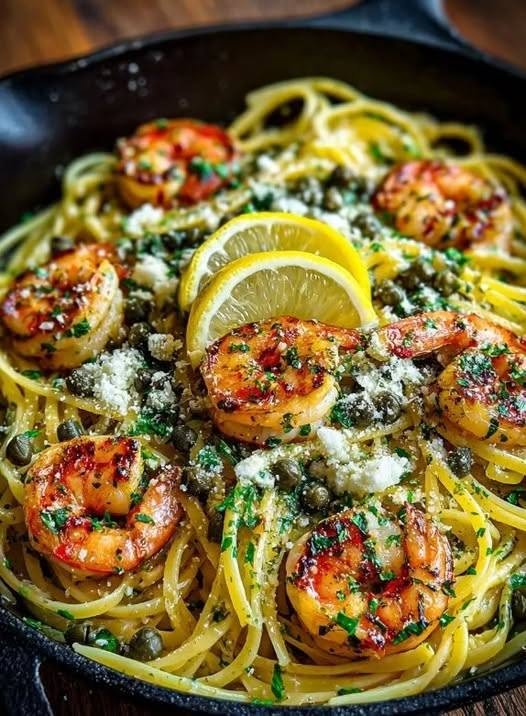
Mediterranean Shrimp Linguine with Lemon Butter & Capers
There are nights when I want dinner to feel a little special without actually spending a lot of time in the kitchen.
This Mediterranean Shrimp Linguine with Lemon Butter & Capers is exactly that kind of recipe.
It has everything I love about Mediterranean-inspired cooking: juicy shrimp, plenty of garlic, bright lemon, salty capers, fresh parsley, and pasta coated in a silky buttery sauce.
The first time I made this, I was looking for something quick enough for a weeknight but still good enough to put on the table when family was visiting.
It worked perfectly.
The shrimp cooked in just a few minutes, the pasta came together while the sauce was bubbling away, and the whole kitchen smelled like garlic and lemon.
By the time I carried the skillet to the table, everyone was already asking what was for dinner.
And once we started eating, there was that familiar moment when everyone gets quiet because they’re too busy enjoying the food.
That’s always a good sign.
What I especially love is that this doesn’t need a heavy cream sauce.
The butter, lemon juice, garlic, capers, and a little reserved pasta water create a light, glossy sauce that clings beautifully to every strand of linguine.
It’s bright.
It’s buttery.
It’s garlicky.
And those little capers add just enough salty, briny flavor to make every bite interesting.
If you’re looking for a restaurant-style shrimp pasta that you can make at home in about 30 minutes, this is one to keep close.
❤️ Why You’ll Love This Mediterranean Shrimp Linguine
Ready in about 30 minutes
Uses simple ingredients
Juicy, tender shrimp
Bright lemon-butter sauce
Plenty of fresh garlic
Briny capers add incredible flavor
No heavy cream required
Perfect for weeknight dinners
Elegant enough for entertaining
Easy to customize with vegetables and herbs
The secret is keeping the shrimp tender and using reserved pasta water to help the sauce become silky instead of greasy.
🛒 Ingredients
For the Shrimp
1 pound large shrimp, peeled and deveined
1 tablespoon olive oil
½ teaspoon paprika
½ teaspoon Italian seasoning
¼ teaspoon salt
¼ teaspoon black pepper
For the Linguine
12 ounces linguine
3 tablespoons unsalted butter, divided
4 cloves garlic, finely minced
½ cup dry white wine or chicken/vegetable broth
1 large lemon, zested and juiced
2 tablespoons capers, drained
½ cup reserved pasta water, plus more if needed
¼ teaspoon red pepper flakes, optional
¼ cup fresh parsley, chopped
Salt and black pepper, to taste
Optional Mediterranean Additions
For an even more Mediterranean-style pasta, you can add:
½ cup halved cherry tomatoes
⅓ cup Kalamata olives
½ cup artichoke hearts
¼ cup crumbled feta
Fresh basil
Extra lemon wedges
These additions are optional, but they are delicious.
🍋 Choosing the Best Shrimp
I usually prefer large shrimp for this recipe because they stay juicy and are less likely to overcook while you’re finishing the pasta.
Fresh or frozen shrimp both work.
If using frozen shrimp, thaw them completely and pat them very dry before cooking.
That last part is important.
Wet shrimp tend to steam in the skillet instead of developing those beautiful golden edges.
And nobody wants watery shrimp in their pasta.
👩🍳 How to Make Mediterranean Shrimp Linguine
1. Cook the Linguine
Bring a large pot of generously salted water to a boil.
Add the linguine and cook according to the package directions until al dente.
You want the pasta to still have a little bite because it will finish cooking in the skillet.
Before draining, scoop out at least ½ cup of pasta water.
I like to save closer to a cup just in case.
That starchy water is one of the easiest ways to loosen the sauce while helping it cling to the pasta.
Drain the linguine and set it aside.
🦐 2. Season the Shrimp
Pat the shrimp dry with paper towels.
Place them in a bowl and season with paprika, Italian seasoning, salt, and black pepper.
Toss gently until evenly coated.
You don’t need a complicated spice mixture here.
The lemon, garlic, butter, and capers are going to do most of the flavor work.
🔥 3. Sear the Shrimp
Heat the olive oil in a large skillet over medium-high heat.
Add the shrimp in a single layer.
Cook for approximately 2 minutes on the first side.
Turn the shrimp and cook for another 1–2 minutes, or until they are pink, opaque, and just cooked through.
Don’t walk away from them.
Shrimp can go from perfectly tender to rubbery surprisingly quickly.
Once they’re cooked, transfer them to a plate.
They’ll return to the skillet at the end.
🧄 4. Start the Lemon Butter Sauce
Reduce the heat to medium.
Add 2 tablespoons of butter to the same skillet.
Once melted, add the minced garlic.
Cook for about 30 seconds, stirring constantly.
You want the garlic fragrant but not deeply browned.
Burned garlic can make the entire sauce taste bitter.
🍷 5. Deglaze the Skillet
Pour in the white wine or broth.
Use your wooden spoon or spatula to scrape up any flavorful browned bits from the bottom of the skillet.
Let the liquid simmer for about 2–3 minutes.
If you’re using wine, this gives it time to reduce slightly.
If you prefer not to cook with wine, chicken or vegetable broth works beautifully.
🍋 6. Add Lemon and Capers
Add:
Lemon zest
Lemon juice
Capers
Red pepper flakes, if using
Stir everything together.
Let it gently simmer for another minute.
At this point, the kitchen should smell absolutely incredible.
Garlic.
Lemon.
Butter.
That little salty aroma from the capers.
This is where the dish really starts coming together.
🧈 7. Make the Sauce Silky
Add the remaining 1 tablespoon of butter.
Then add about ¼ cup of reserved pasta water.
Stir vigorously or gently toss the skillet to combine everything.
The starch from the pasta water helps bring the butter and liquid together into a smoother sauce that coats the pasta rather than simply sitting underneath it.
If the sauce looks too thick, add another splash of pasta water.
If it looks too thin, let it simmer for another minute.
🍝 8. Add the Linguine
Add the drained linguine directly to the skillet.
Using tongs, toss the pasta continuously for about 1–2 minutes.
You want every strand coated in the lemon-butter sauce.
This is also when the pasta absorbs all those wonderful flavors from the skillet.
Taste it.
Add more black pepper, salt, lemon juice, or capers if needed.
Remember that capers already bring quite a bit of saltiness, so taste before adding much extra salt.
🦐 9. Return the Shrimp
Add the cooked shrimp back to the skillet.
Toss everything together gently for about 30 seconds to 1 minute, just until the shrimp are warmed through.
Don’t continue cooking them unnecessarily.
Tender shrimp are the goal.
🌿 10. Finish With Fresh Parsley
Turn off the heat.
Sprinkle the pasta generously with chopped fresh parsley.
Add a little extra lemon zest if you love a strong lemon flavor.
Serve immediately with lemon wedges on the side.
And if you’re anything like me, you’ll probably want a little extra cracked black pepper too.
🍅 Easy Mediterranean Additions
This recipe is delicious exactly as written, but you can easily turn it into an even more colorful Mediterranean-inspired meal.
Cherry Tomatoes
Add halved cherry tomatoes after the garlic has softened.
Cook for 2–3 minutes until they begin to soften and release some juice.
Kalamata Olives
Add about ⅓ cup sliced Kalamata olives with the capers.
The combination of olives, capers, lemon, and shrimp is fantastic.
Artichoke Hearts
Add drained quartered artichoke hearts when you add the pasta.
They bring a wonderful tender texture and slightly tangy flavor.
Spinach
Add 2 cups of baby spinach during the final minute of cooking.
The residual heat will wilt it quickly.
Feta
Finish each serving with a little crumbled feta.
The salty feta works beautifully with the lemon and capers.
⭐ My Best Tips for Perfect Shrimp Linguine
Don’t overcook the shrimp
This is probably the most important tip.
Shrimp cook quickly.
As soon as they’re pink, opaque, and curled, they’re usually ready.
Pat the shrimp dry
Dry shrimp sear much better than wet shrimp.
Save pasta water
Don’t drain all that starchy cooking liquid down the sink.
It’s incredibly useful for creating a silky sauce.
Use fresh lemon
Fresh lemon juice tastes much brighter than bottled lemon juice, especially in a simple sauce like this.
Don’t burn the garlic
Garlic only needs a short time in the butter.
Keep the heat moderate and stir it.
Add butter at the end
Finishing with butter helps create a smooth, glossy sauce.
Toss the pasta in the skillet
Don’t simply pour sauce over the pasta.
Let the linguine finish in the skillet so it absorbs the flavor.
🍷 Can I Make This Without Wine?
Absolutely.
You don’t need wine to make a delicious sauce.
Simply substitute:
Chicken broth
Vegetable broth
Seafood stock
A splash of water with extra lemon juice
Chicken or vegetable broth is probably the easiest everyday substitution.
🧀 Should I Add Parmesan?
You can, although I personally prefer this particular pasta without much cheese.
The lemon, capers, shrimp, and butter already provide plenty of flavor.
If you’d like Parmesan, add a small amount just before serving.
Feta is another delicious option if you want to lean further into the Mediterranean flavors.
🌶️ Make It Spicy
If you enjoy a little heat, add:
Red pepper flakes
A pinch of cayenne
Finely chopped fresh chili
A drizzle of chili oil
Start small.
You want the heat to complement the lemon and shrimp rather than overpower them.
🥗 What to Serve With Mediterranean Shrimp Linguine
This pasta is satisfying enough to serve as a complete meal, but a few simple sides make it feel like a full dinner spread.
Garlic Bread
Perfect for soaking up the last bit of lemon-butter sauce.
Simple Green Salad
A crisp salad with lemon vinaigrette keeps the meal fresh.
Roasted Asparagus
The slightly charred asparagus pairs beautifully with lemon and garlic.
Steamed Broccolini
A little olive oil, salt, lemon, and garlic is all it needs.
Roasted Vegetables
Try zucchini, bell peppers, cherry tomatoes, or eggplant.
Crusty Bread
Honestly, any good crusty bread will disappear quickly beside this pasta.
🍽️ Perfect for a Dinner Party
This is one of those recipes that looks much more complicated than it actually is.
That’s exactly why I love serving it when guests come over.
You can prepare the ingredients ahead of time, cook the pasta while you’re finishing the shrimp, and have dinner on the table quickly.
Serve it family-style in a large shallow bowl.
Scatter the shrimp over the top.
Add fresh parsley.
Place lemon wedges around the edges.
Then bring it straight to the table.
It looks beautiful without requiring a lot of fuss.
🔄 Easy Variations
Creamy Lemon Shrimp Linguine
Add ¼ cup heavy cream to the sauce after the broth reduces.
Simmer gently until slightly thickened.
Spinach Shrimp Linguine
Add 2 cups baby spinach at the end and toss until wilted.
Tomato Shrimp Linguine
Add cherry tomatoes and a tablespoon of tomato paste for a slightly richer sauce.
Mediterranean Olive & Feta Linguine
Add Kalamata olives and finish with crumbled feta.
Spicy Garlic Shrimp Linguine
Increase the red pepper flakes and add a drizzle of chili oil before serving.
Extra Lemon Linguine
Add additional lemon zest at the end for an especially bright finish.
🧊 How to Store Leftovers
Transfer cooled leftovers to an airtight container.
Refrigerate for up to 3 days.
Because shrimp and pasta can dry out when refrigerated, I recommend storing any extra sauce with the pasta rather than separately.
🔥 How to Reheat Shrimp Linguine
The stovetop gives you the best results.
Place the pasta in a skillet over medium-low heat.
Add a splash of water or broth.
Cover and gently warm until heated through.
Toss occasionally.
Avoid cooking the shrimp for too long during reheating because they can become tough.
You can also microwave individual portions in short intervals, stirring between each one.
❄️ Can You Freeze Shrimp Linguine?
You can, but I don’t recommend it for the best texture.
Cooked pasta can become soft after freezing and thawing, while shrimp can lose their tender texture.
If you need to freeze it, cool it completely and store it in an airtight freezer-safe container.
For best quality, use within 1–2 months.
Thaw overnight in the refrigerator and reheat gently.
❓ Frequently Asked Questions
Can I use frozen shrimp?
Yes.
Thaw them completely before cooking and pat them very dry.
What size shrimp should I use?
Large shrimp are ideal because they’re substantial enough to remain juicy while the pasta and sauce come together.
Can I use spaghetti instead of linguine?
Absolutely.
Spaghetti, fettuccine, bucatini, or angel hair can all work.
Linguine is simply my favorite because its flat shape holds onto the sauce beautifully.
Can I use bottled lemon juice?
You can, but fresh lemon is strongly recommended.
You’ll get a brighter, cleaner flavor.
Do I have to use capers?
No.
If you don’t like capers, simply leave them out.
You can add chopped Kalamata olives instead for a different Mediterranean-style flavor.
Why does my sauce look oily?
The sauce may need more pasta water and vigorous tossing.
Add a tablespoon or two of pasta water and toss the linguine over low heat until the butter and liquid come together.
Why did my shrimp become rubbery?
They were probably cooked too long.
Shrimp only need a few minutes, depending on their size.
Remove them from the pan as soon as they’re opaque and cooked through.
Can I add vegetables?
Definitely.
Spinach, cherry tomatoes, zucchini, asparagus, artichokes, and bell peppers all work beautifully.
Can I make this gluten-free?
Yes.
Simply use your favorite gluten-free linguine or spaghetti.
Check all packaged ingredients, particularly broth and seasonings, if you need to avoid gluten strictly.
Can I make this dairy-free?
Yes.
Replace the butter with a good-quality dairy-free butter or additional olive oil.
Is this a creamy pasta?
It isn’t traditionally cream-based.
The sauce gets its silky texture from butter, lemon, and starchy pasta water.
📝 Recipe at a Glance
Recipe: Mediterranean Shrimp Linguine with Lemon Butter & Capers
Prep Time: 10 minutes
Cook Time: 15–20 minutes
Total Time: About 25–30 minutes
Servings: 4
Course: Main Course
Cuisine: Mediterranean-Inspired
Method: Stovetop
Ingredients
1 lb large shrimp, peeled and deveined
1 tbsp olive oil
½ tsp paprika
½ tsp Italian seasoning
¼ tsp salt
¼ tsp black pepper
12 oz linguine
3 tbsp unsalted butter, divided
4 cloves garlic, minced
½ cup dry white wine or broth
1 large lemon, zested and juiced
2 tbsp capers
½ cup reserved pasta water
¼ tsp red pepper flakes, optional
¼ cup fresh parsley, chopped
Instructions
Cook linguine in salted water until al dente.
Reserve at least ½ cup pasta water and drain.
Season the shrimp with paprika, Italian seasoning, salt, and pepper.
Sear shrimp in olive oil for about 2 minutes per side. Remove.
Melt 2 tablespoons butter in the skillet.
Add garlic and cook for about 30 seconds.
Add wine or broth and simmer for 2–3 minutes.
Stir in lemon juice, lemon zest, capers, and red pepper flakes.
Add remaining butter and reserved pasta water.
Toss cooked linguine into the sauce.
Return shrimp to the skillet and toss gently.
Finish with fresh parsley and serve immediately.
❤️ A Pasta Recipe Worth Keeping
Some recipes are complicated because they need to be.
This one isn’t.
It’s about taking a handful of ingredients that already work beautifully together and letting each one shine.
The shrimp are sweet and tender.
The lemon keeps everything bright.
The garlic brings warmth.
The capers add that wonderful salty little burst.
And the butter ties everything together into a sauce that feels luxurious without being heavy.
I love serving this on evenings when I want something comforting but still fresh.
It’s quick enough for a regular weeknight, but beautiful enough for a dinner with friends.
And honestly, there’s something satisfying about twirling that first forkful of linguine, catching a little shrimp and a few capers, and getting that burst of lemony, garlicky butter.
It’s simple food.
But it doesn’t taste simple.
Make a big skillet, put it in the middle of the table, and don’t be surprised when everyone goes back for seconds.